Editor: Jaap Horst
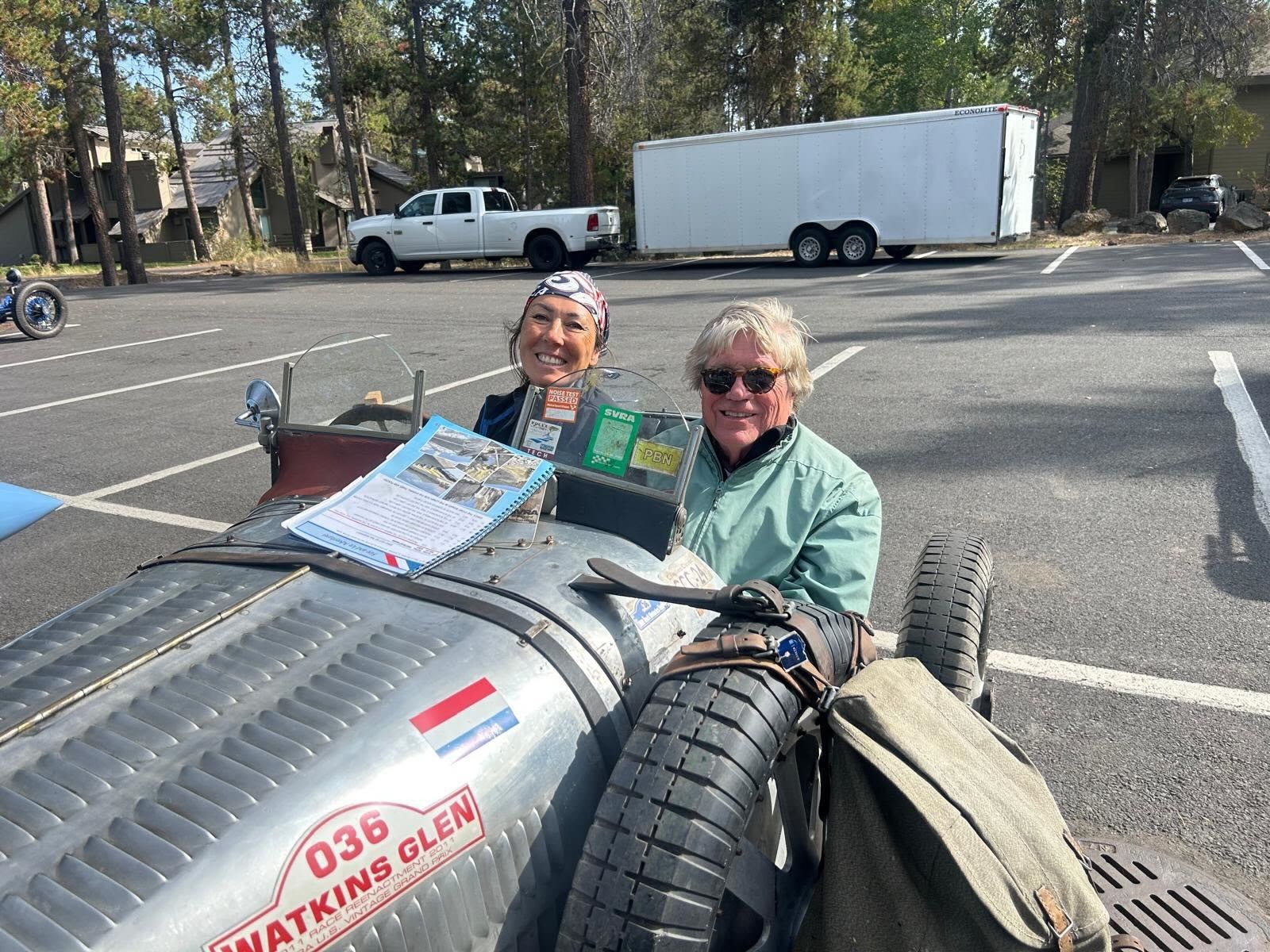
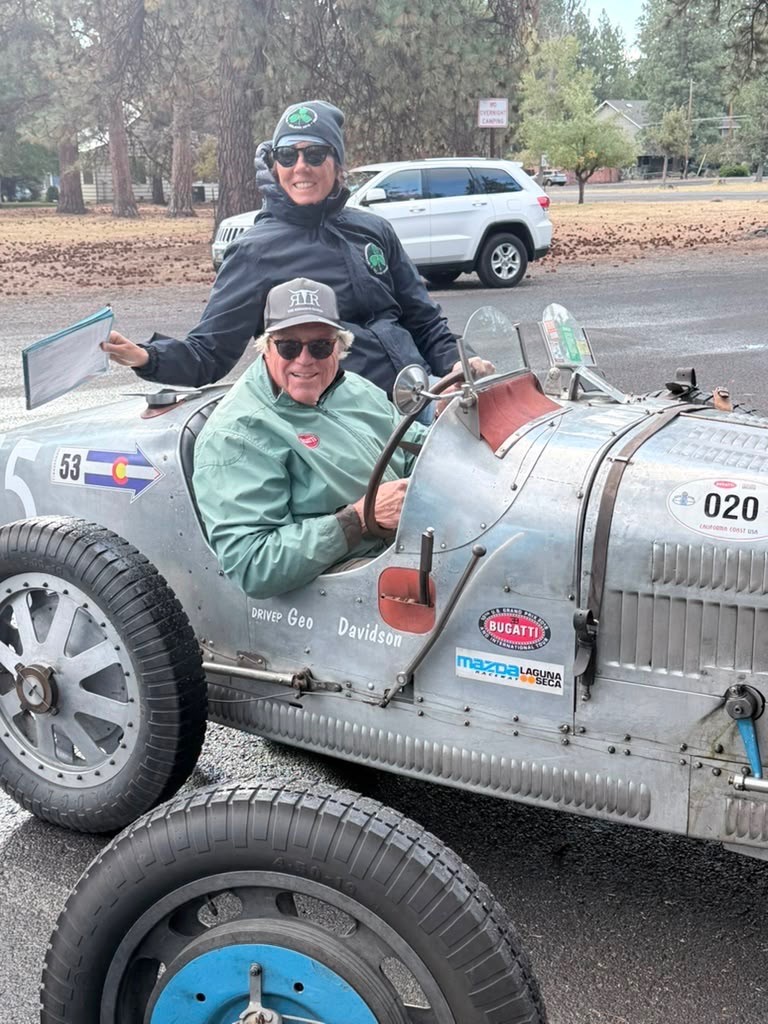
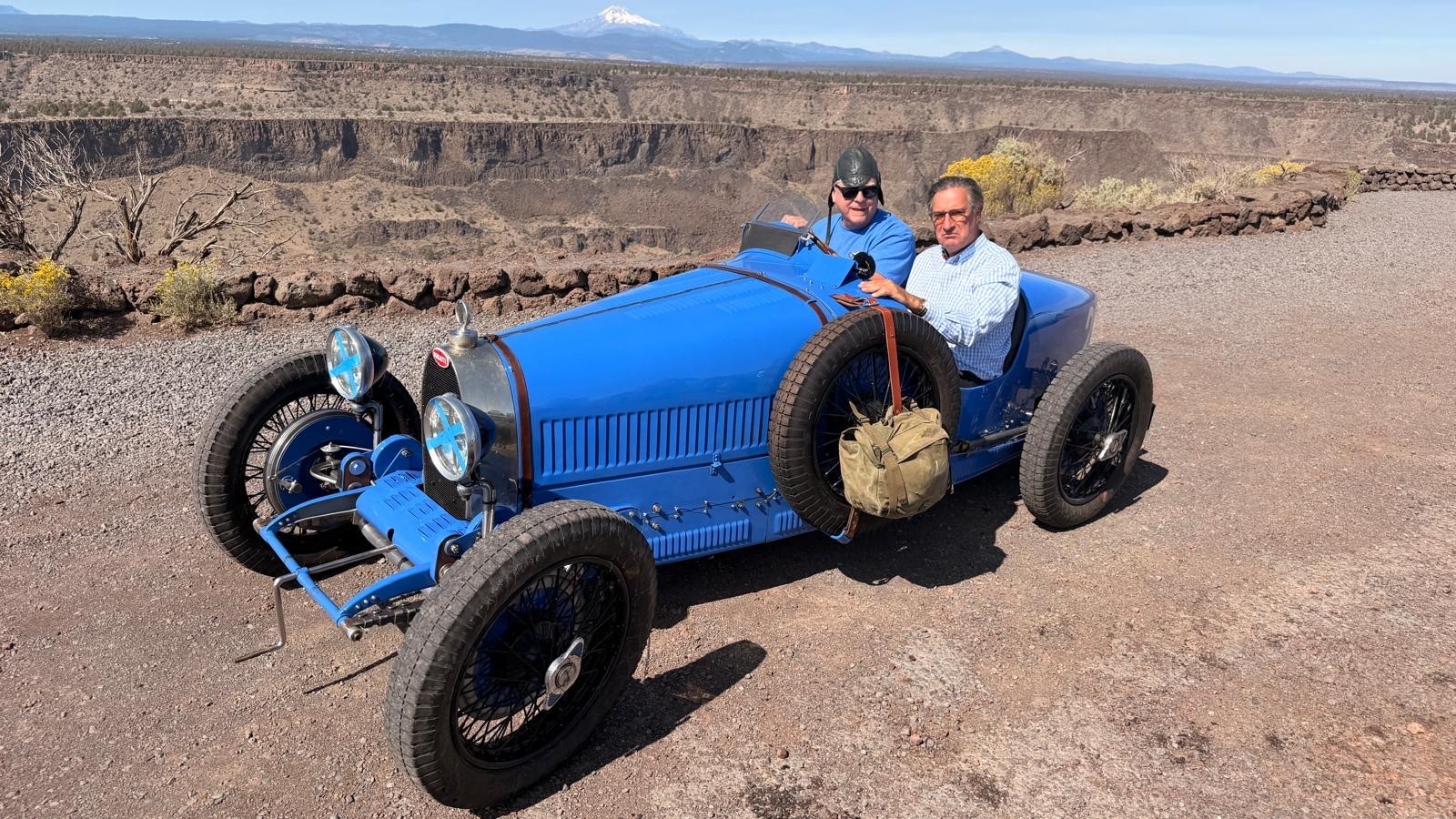
Rainforest, Desert, VolcanoOregon in All of Its MajestyThe International Bugatti Meeting · Central Oregon 7–15 September 2026By Viola Procovio In memory of David Mize, who relished adventures and misadventures, never passed up the chance to make new memories in his Type 40, and loved a good story. I arrived in Oregon without a car. For the first time in a great many years, I had come to an International Bugatti Meeting empty-handed. My own car had been in Denmark in June and could not possibly have crossed an ocean in time. Even if it could, there was the matter of the container, the ocean and the bill that followed them. I had thought about it for a long time and had accepted that I would spend the week in a hire car, following the rally and volunteering wherever I was needed. It would not have been the same, but these meetings are never only about the cars. Once a year, this scattered, slightly mad family gathers around cars and dinner tables to catch up on each other’s lives. There are friends I see only at rallies, and others I have yet to meet, because they do not come to the IBM as often as I do. I wanted to be part of it badly enough that I probably would have gone to Oregon by bicycle. Then George Davidson came to the rescue and offered me the seat beside him in his Type 35B. George lives in Kentucky—which becomes relevant later—and we have known each other in the particular way one knows people in this world: a week at a time, once a year, in a different country each time. I had hardly finished explaining that I was coming without a car when he said I could travel with him. There was no discussion, no calculation, no condition. It was simply the most natural thing in the world to George, which is very much his way. It turned out to be a gift to us both. The days were long, the roads climbed higher than either of us had imagined and, on one memorable afternoon, the sky came down on our heads. But I will come to that.
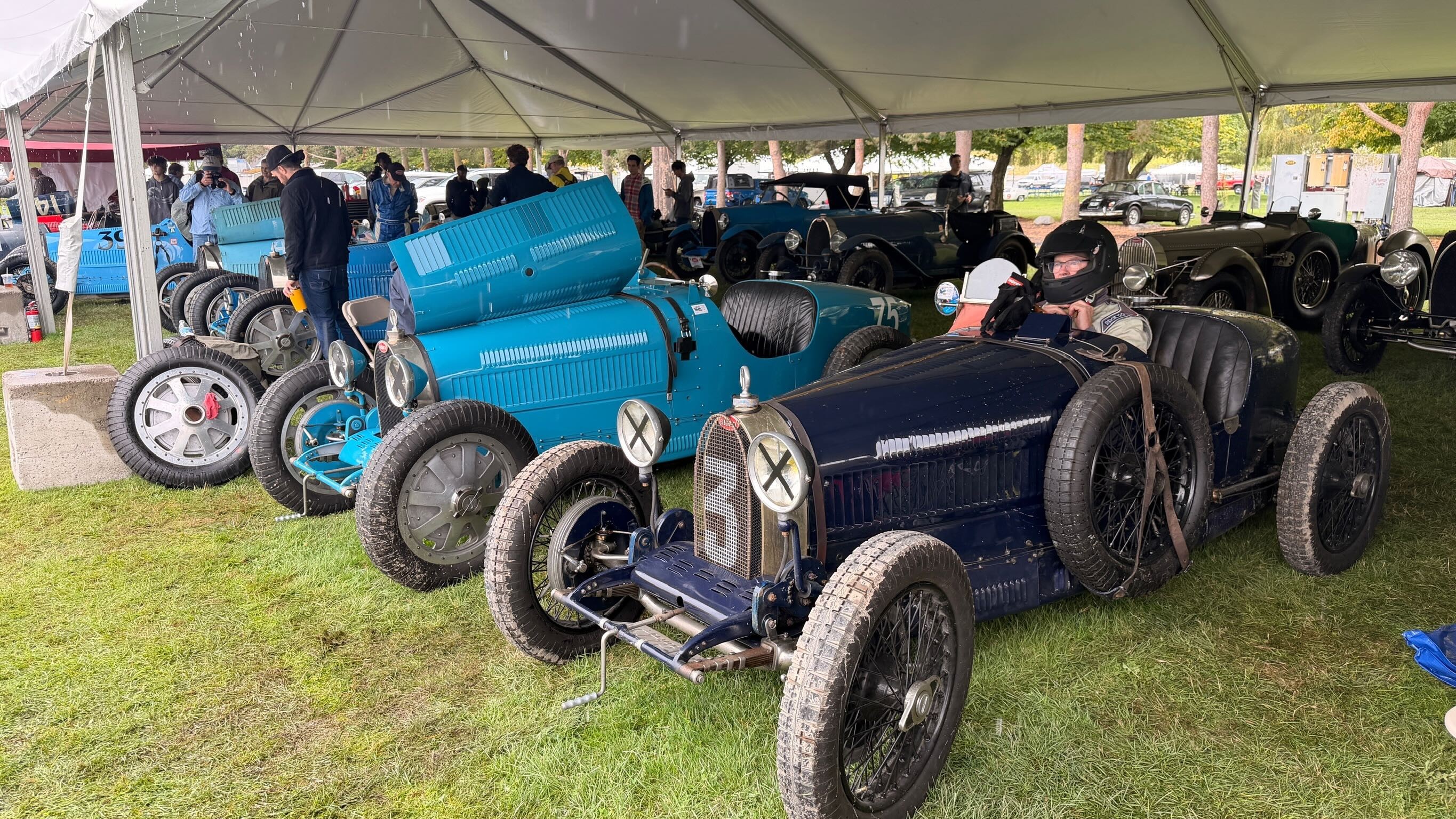
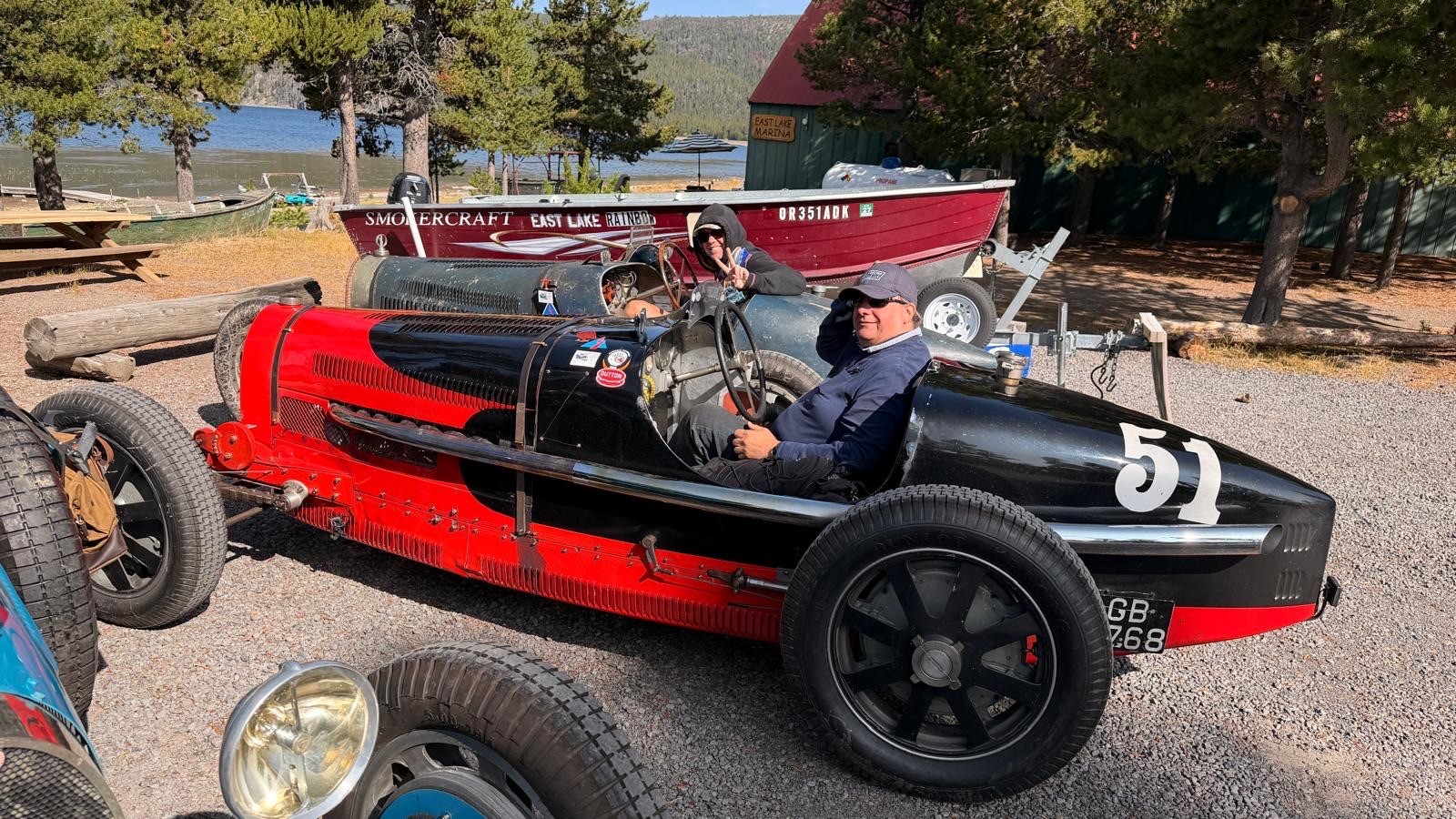
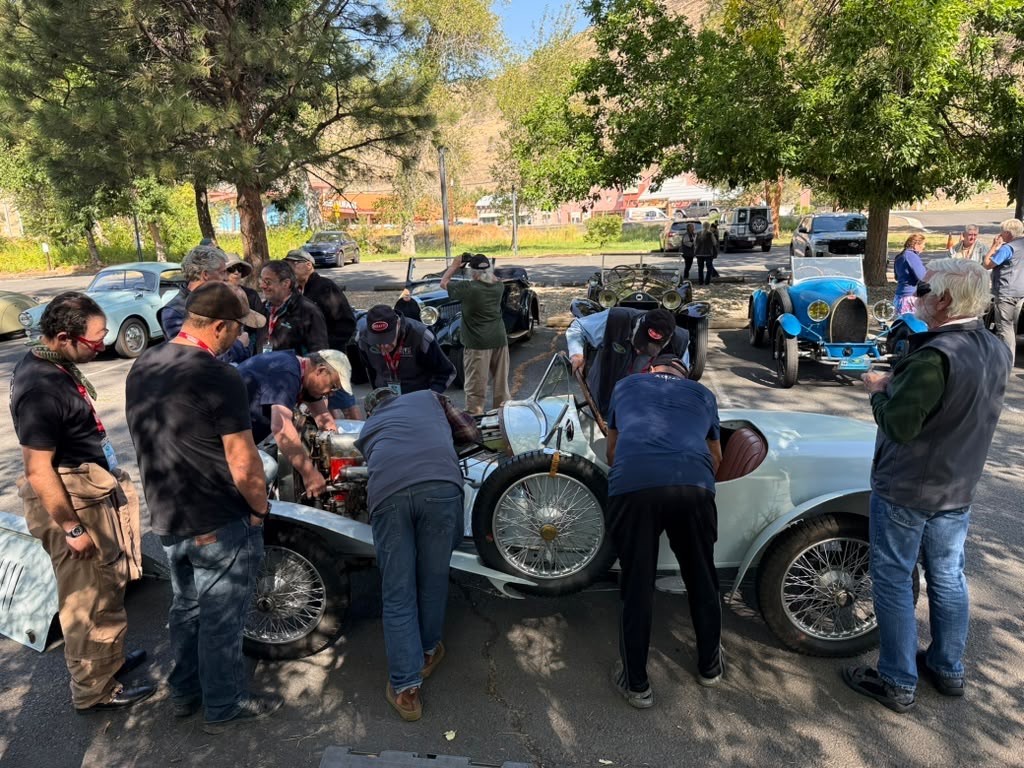
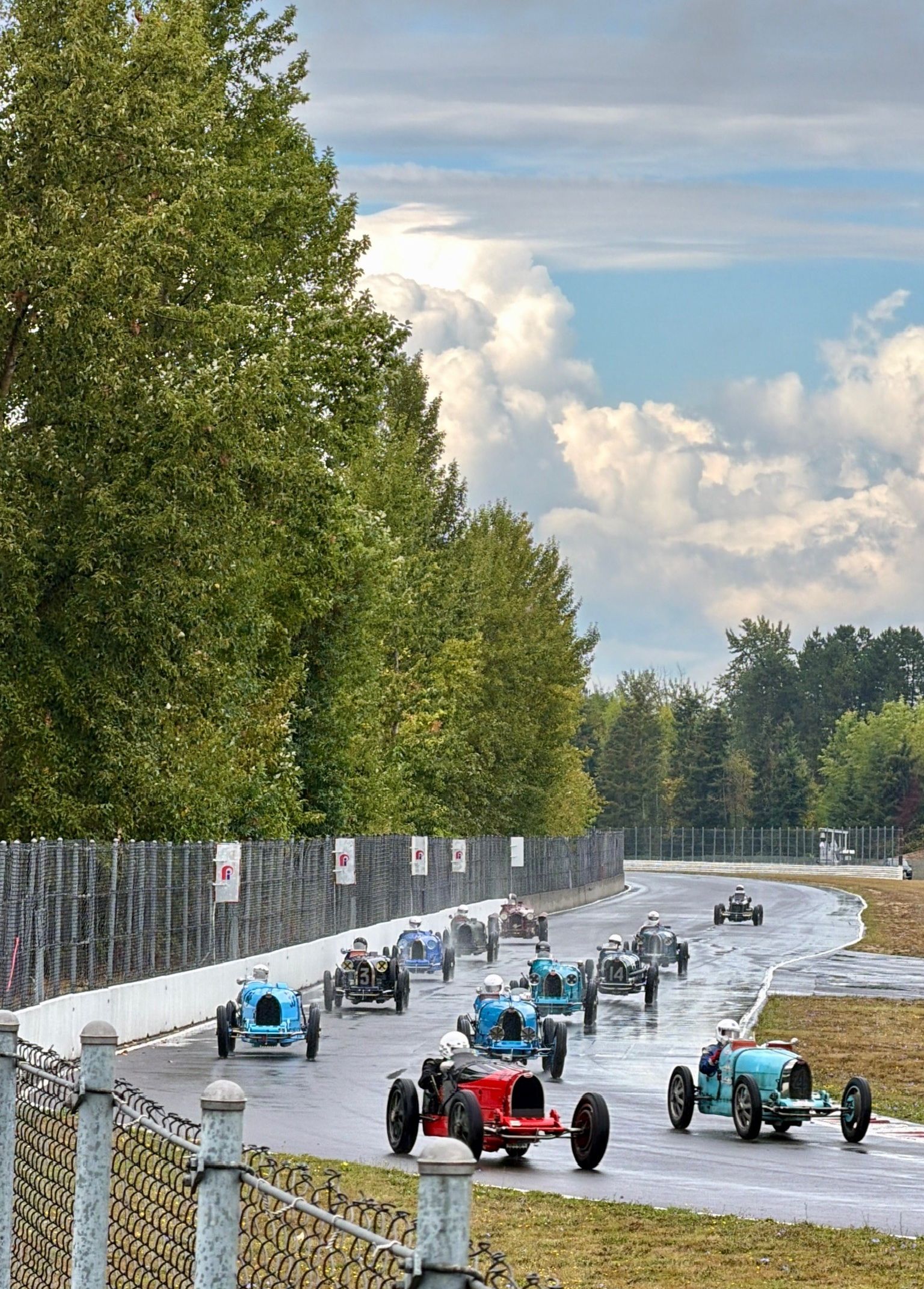
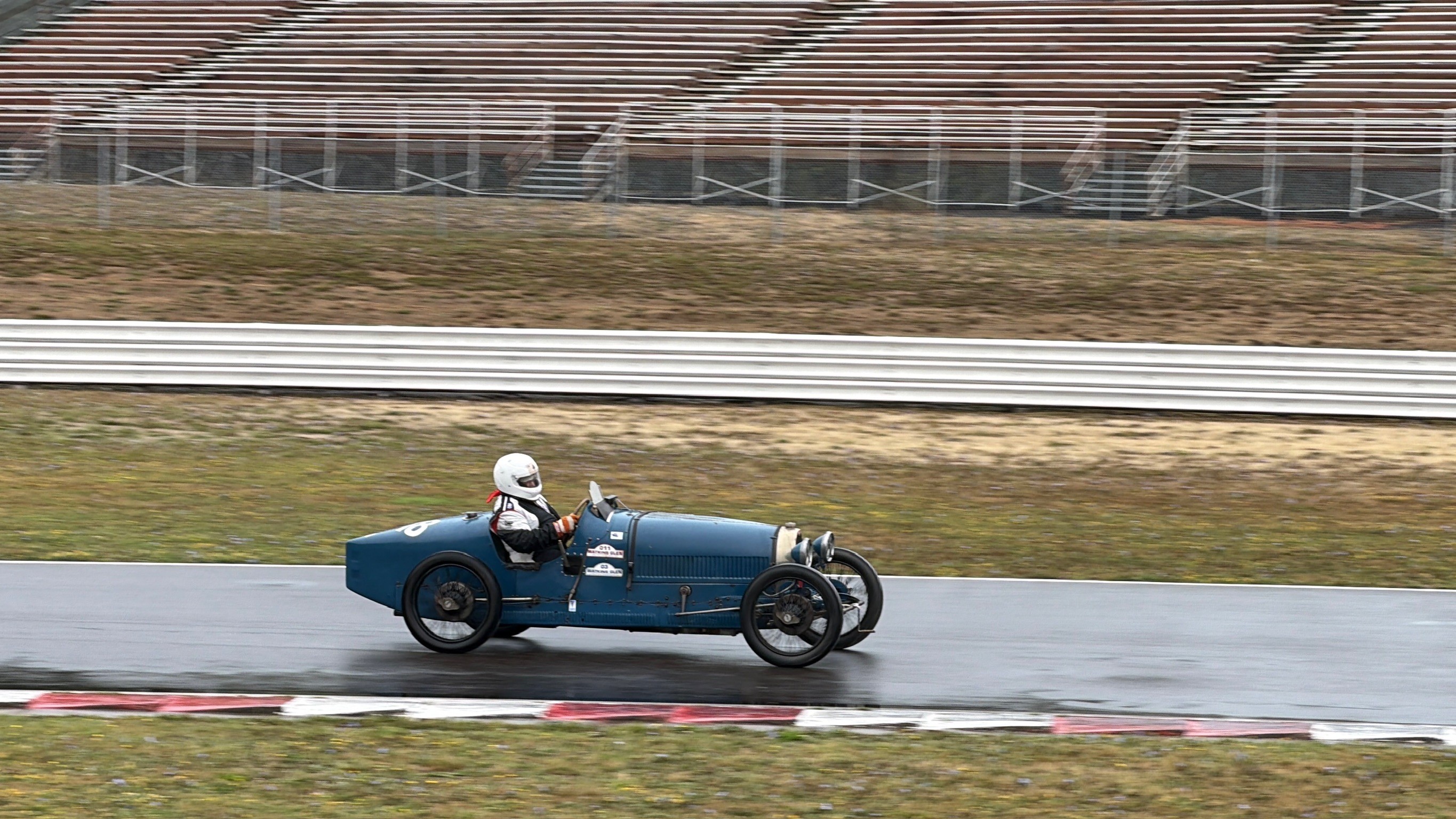
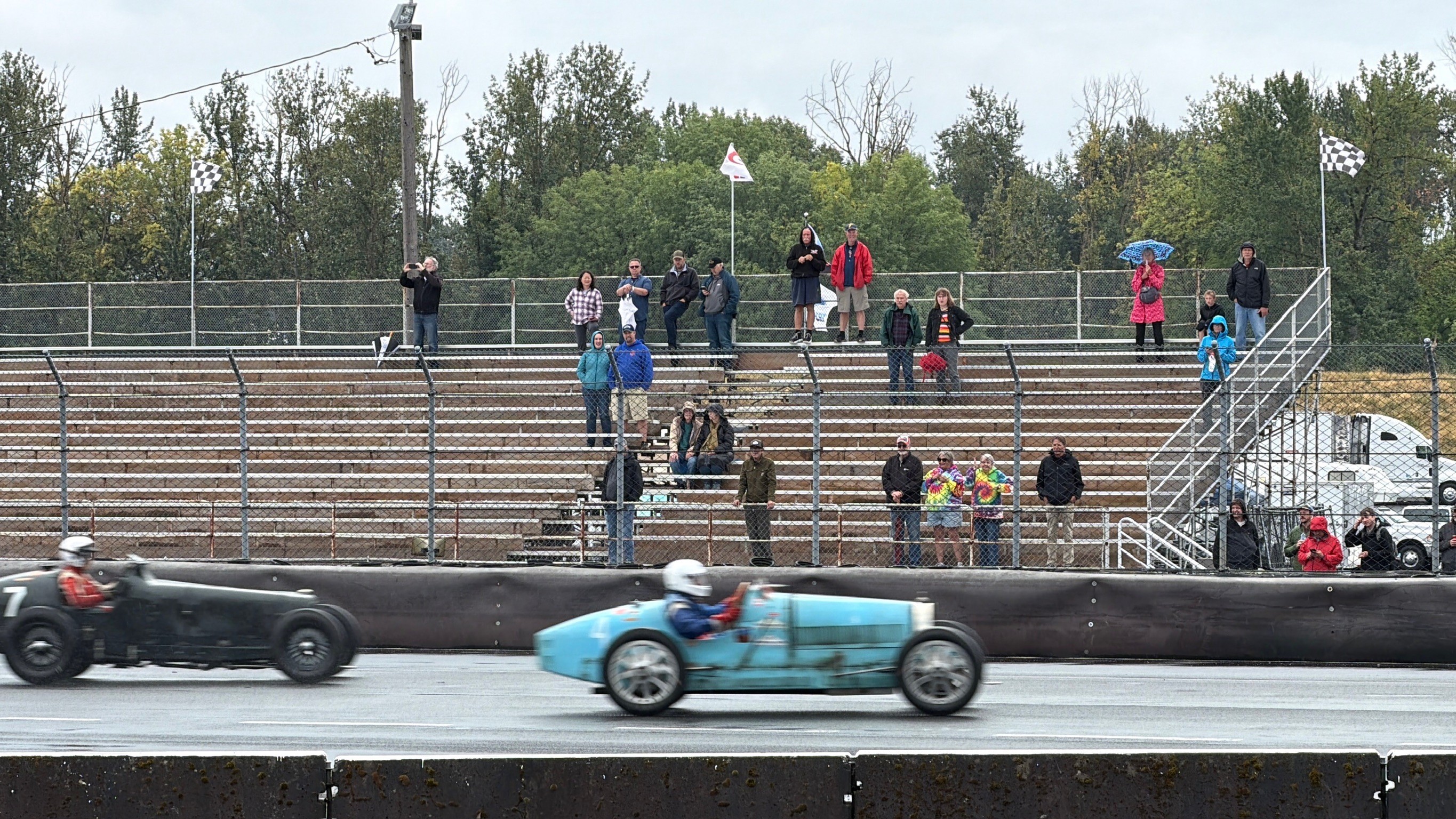
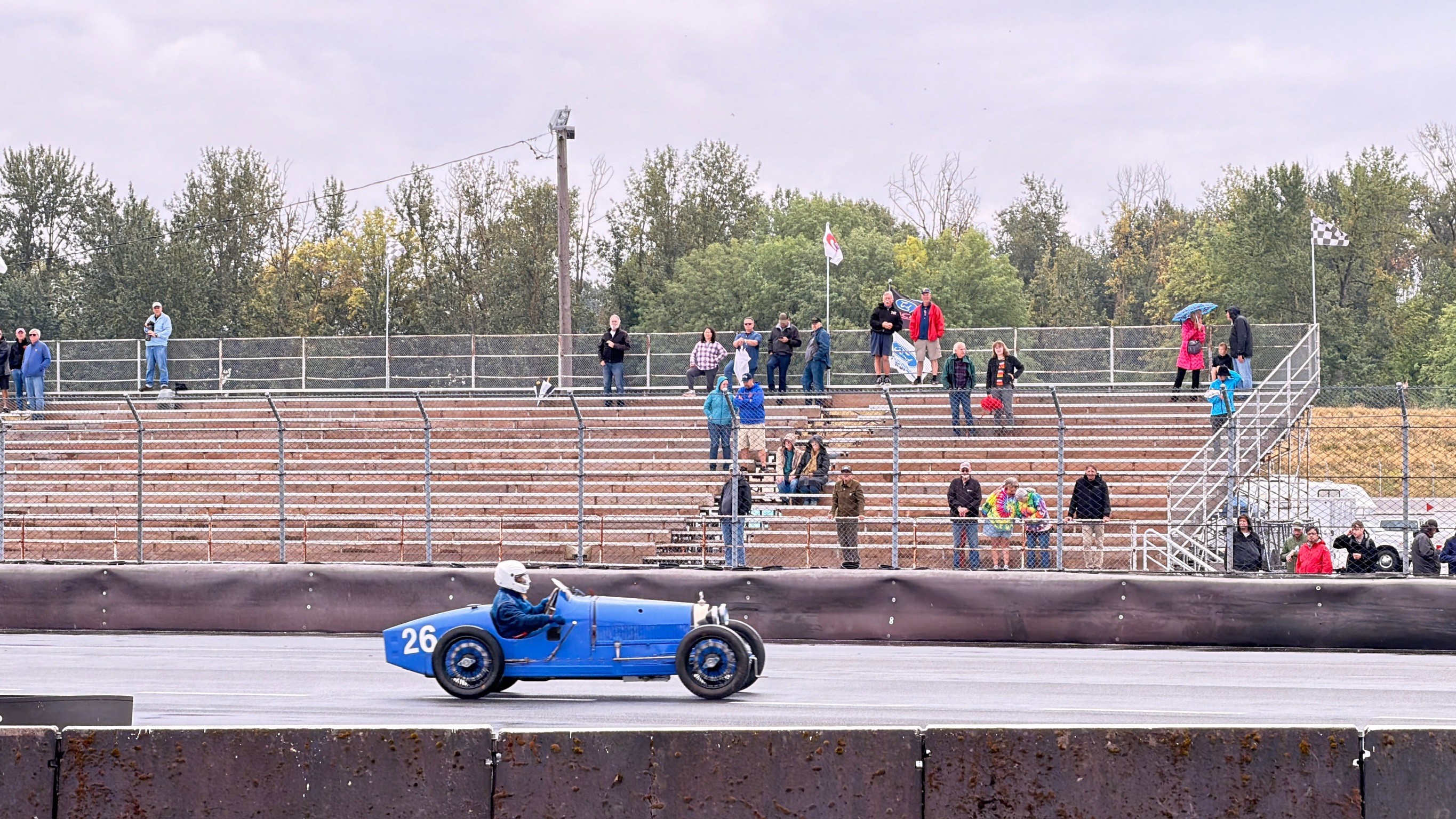
Portland before the rally The rally did not begin until Tuesday, but many of the Bugattisti had been in Portland for several days already. The American Bugatti Club was holding its 12th US Bugatti Grand Prix at Portland International Raceway over the first weekend of September, and the meeting had gathered around it. The race is descended directly from one of Ettore’s ideas. In 1928, he held a Grand Prix at Le Mans for his own customers—amateurs and professionals together—handicapped so that everyone had a genuine chance, with no works entries allowed. André Dubonnet won in a highly tuned Type 37, a minute and a half ahead of Baron Philippe de Rothschild in another 37. The Americans revived the idea in 1987 at Elkhart Lake, with René Dreyfus as Grand Marshal. Thirty-nine years later, the race arrived in Oregon. SOVREN added a Bugatti class to its Columbia River Classic and let fifteen of our cars loose on a road course just under two miles long. I arrived too late for Saturday’s race, so Sunday was all I had, and Sunday was wet. Everyone told me that the day before had been glorious, and that the Bugattis had brought more people through the gates than the circuit normally sees. I believed them at once. The club had made a home in the South Paddock, with the bonnets open all weekend and the chance to see the cars raced by very skilled drivers. There is something irresistible about a Bugatti engine exposed to the air, especially when the person responsible for keeping it alive is there to explain it. A passer-by may arrive knowing nothing at all and leave with the sound and shape of it lodged firmly in their mind. Tim Dutton and Jonathan Bailey had gone to rather more trouble than I had to be there with their cars. Tim brought his 1931 Type 51, Jonathan his ex-Louis Trintignant Type 35C. They had sent them from England in a container—eight weeks out, eight weeks home—for a fortnight of driving. Having crossed an ocean, they decided to stop in Florida on the way to Oregon to drive a NASCAR. By every account, they behaved like two very happy overgrown children for the weekend. I find it difficult not to love the Brits.
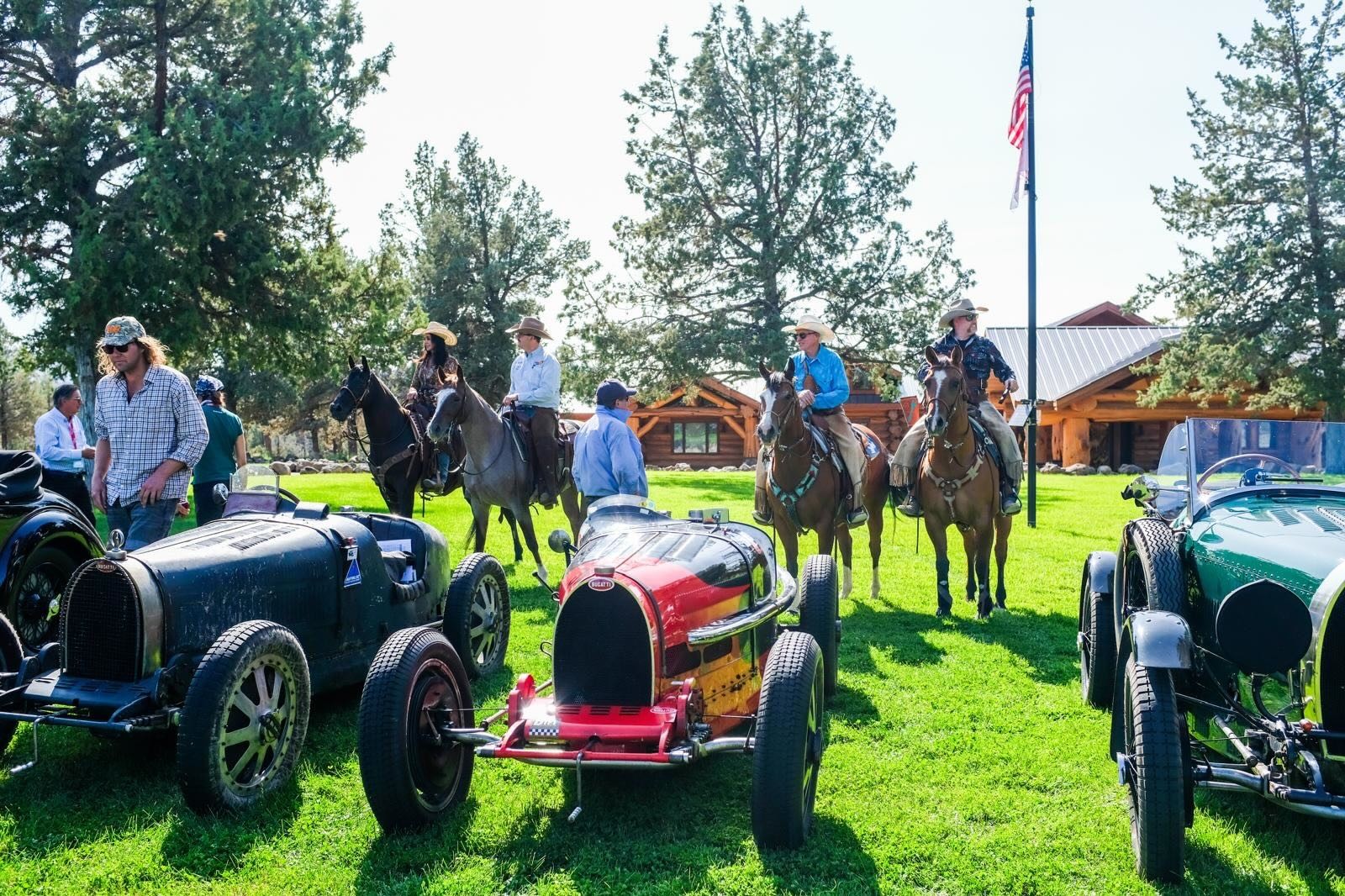
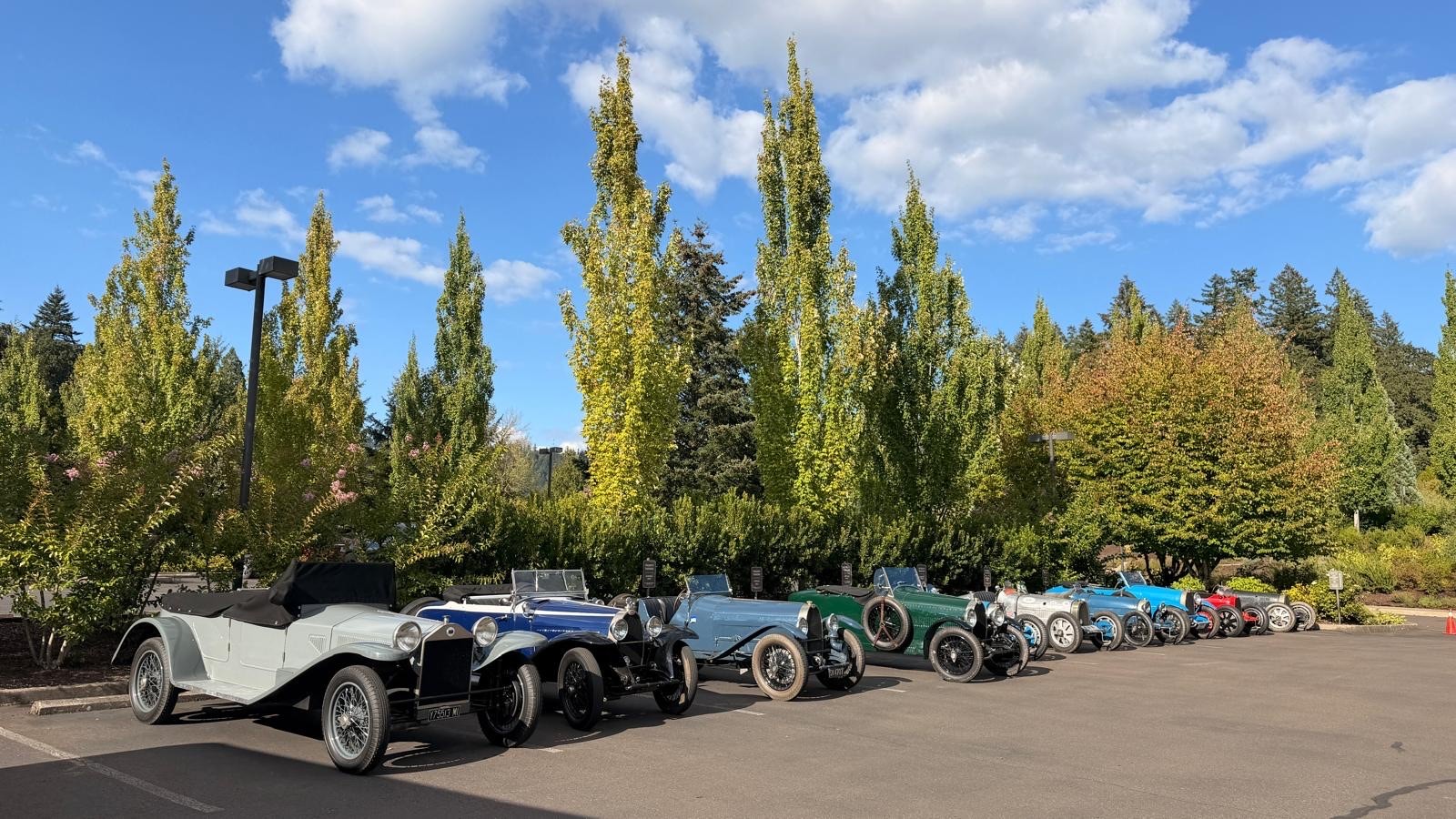
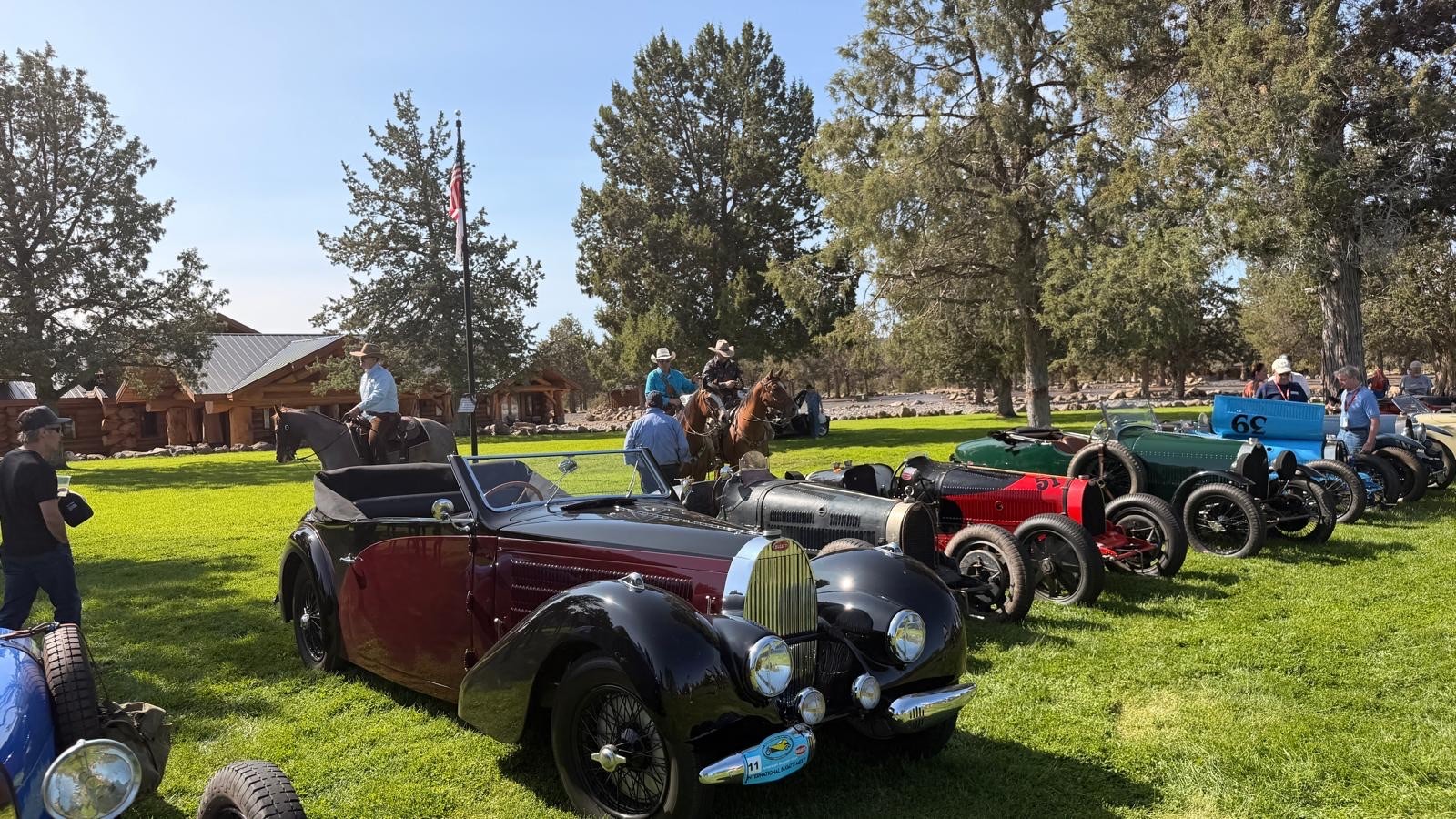
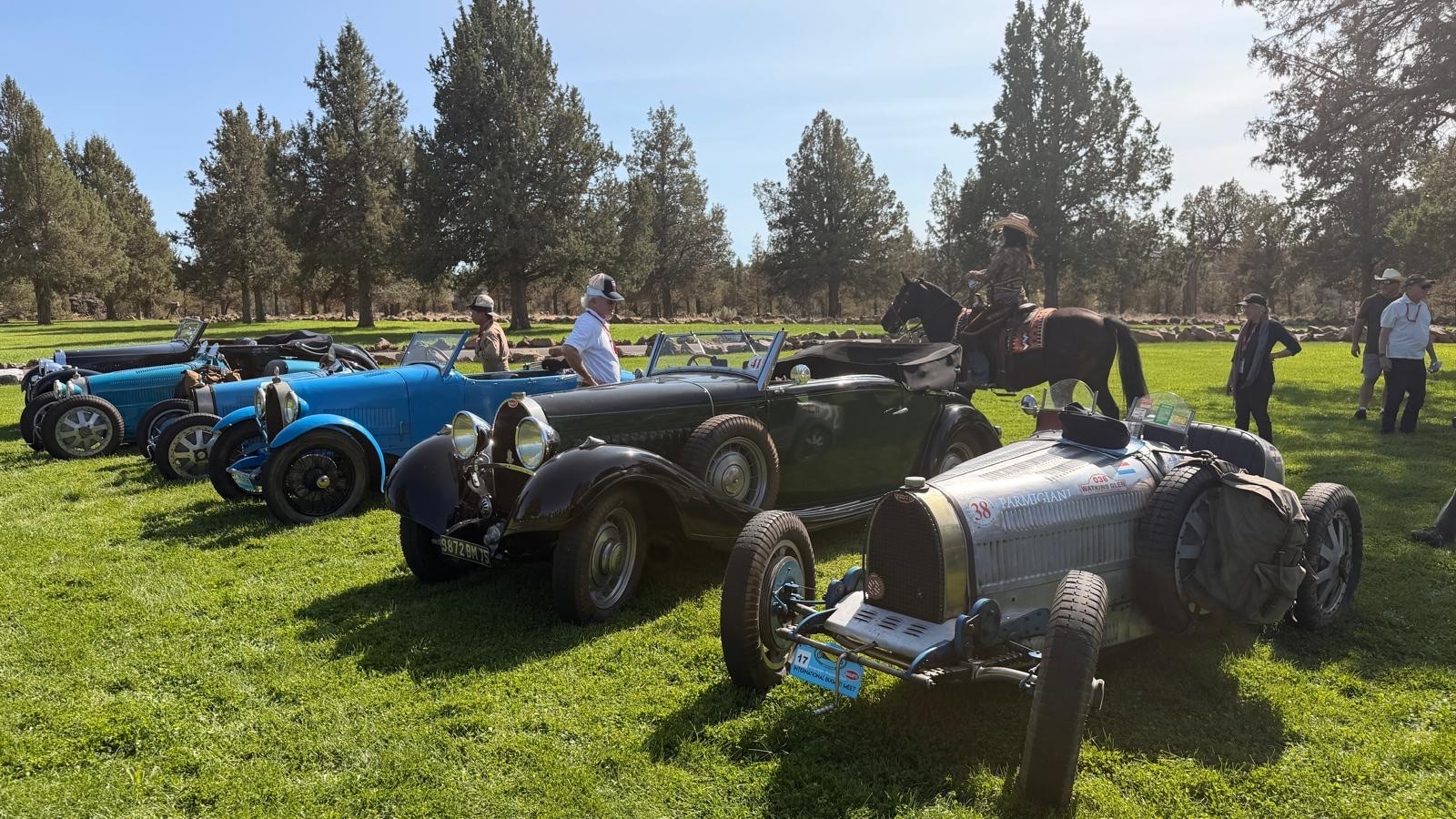
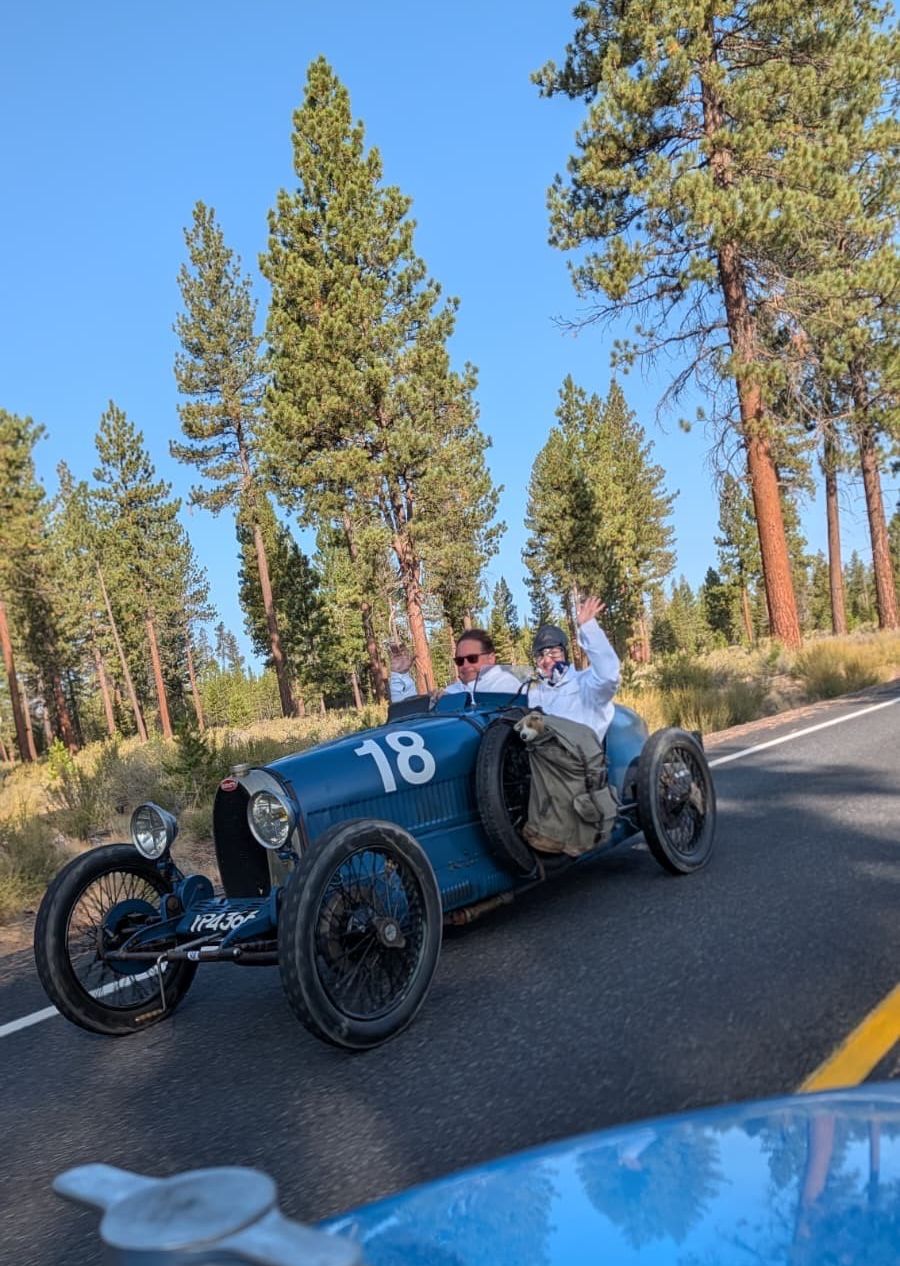
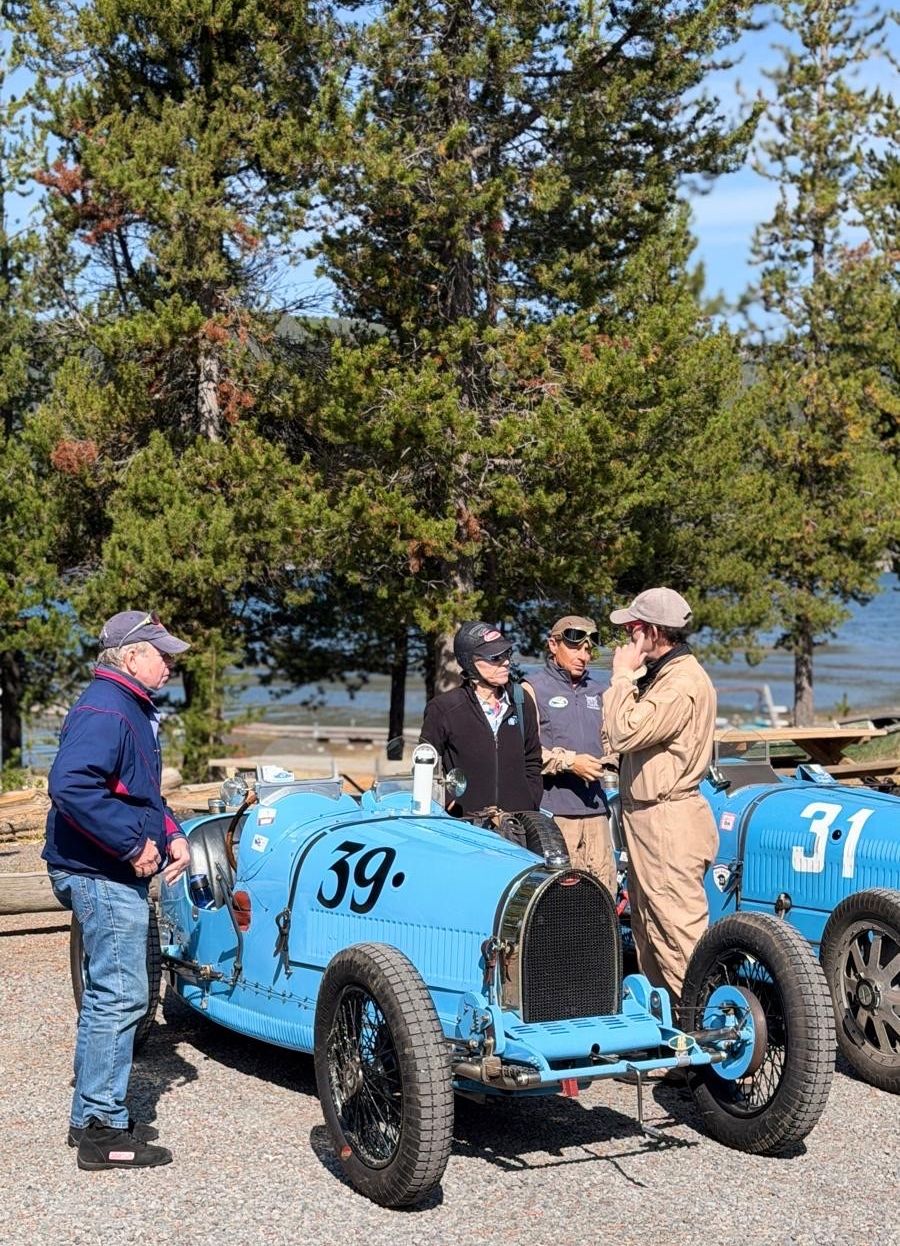
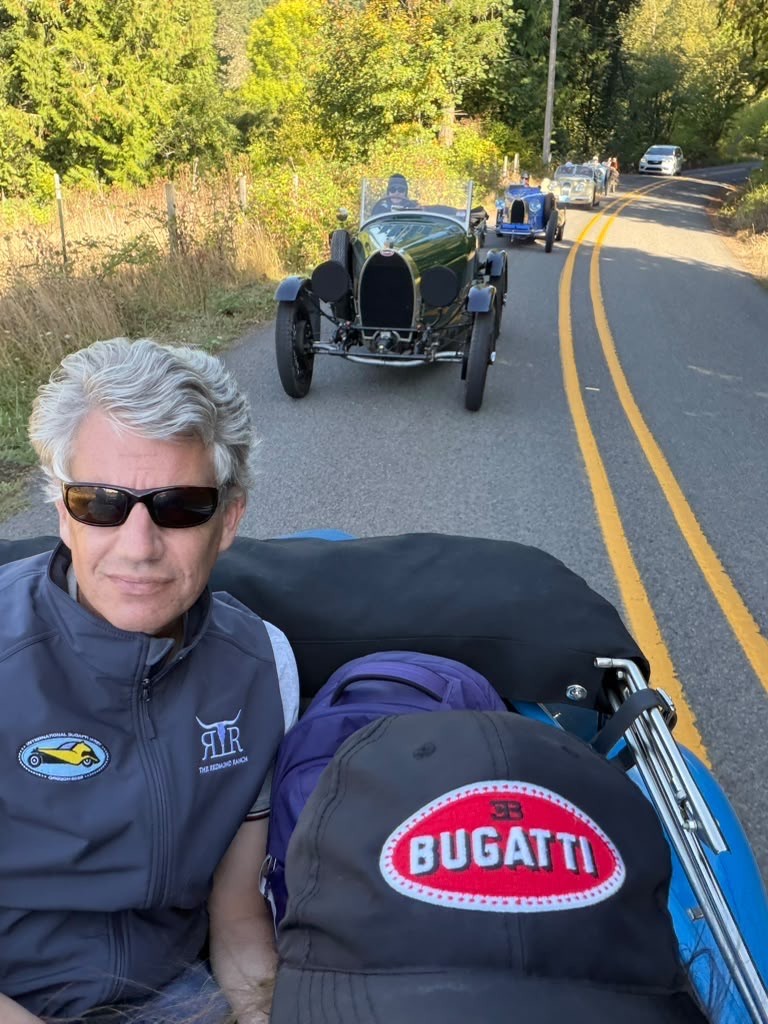
Only thirty-five cars but a great deal of kindness Before a single mile had been driven, it was impossible not to see how much of Ed Godshalk’s life had gone into the week. He gave four years to it. Before he began planning in earnest, he travelled to two International Bugatti Meetings simply to watch, listen and learn what it takes to look after ninety cars and the people who come with them. Every hotel, every restaurant, every volunteer and every mile of road had been thought through. That effort was almost invisible once we arrived, which is exactly how good organisation ought to feel. Yet it was there in everything: the ease of the arrivals, the warmth of the welcome and the way Oregon opened itself to us day by day. Ed had wanted those of us who were not American to understand something of the West as he knew it - the forest, the mountains, the desert and the volcanoes - and he had laid out a week in which we could do precisely that. That meant leaving something out, and he left it out deliberately. Oregon has a famous coastline, and not one mile of it appeared in the route book. Ed's reasoning was that the previous American IBM had already shown us a great deal of Pacific coast, and that a second week of it would have felt like a repetition. He chose Central Oregon instead, to show us the other side of his state: the high desert, the caldera and the volcanoes. It was the right call, and it is the reason the week felt like somewhere none of us had been. He had hoped for eighty cars. Thirty-five came. America is a long way away; it is expensive to reach; and many Bugattists cannot imagine a rally without their own car beneath them. The field therefore ran from Alan Travis’s 1913 Type 22, the oldest car present by more than a decade, through the Brescias and the Grand Prix 35s and 37s, to the Type 57s. Two Lancia Lambdas, a 1924 Bentley and a Jaguar joined us for company. And I am going to say something slightly sacrilegious: it was better this way. Eighty or a hundred cars make a wonderful spectacle. Thirty-five make a rally in which people properly meet. By the third evening, I knew everybody's name and much of their history; by the last, I knew rather more than that. At the largest meetings, one can come home with the odd feeling of having spoken to everyone and no one. Oregon was the opposite. We ate together every night, and usually ended the evening in a bar. By the end, we were no longer a field of entrants. We were friends who happened to have arrived in some very fine cars. The most moving thing was how many of those cars had been lent. Dr Atif Zamon entrusted his Austin-Healey 3000 to Neil and Jane Wilson so that they could come from London and take part. Ed lent his Alfa Sprint Veloce to Sandy Leith. George allowed me to share his 35B. Four of us were there because somebody else had opened a garage door, handed over a set of keys and taken the risk without making the smallest fuss. Magnetos were the week’s recurring complaint, and they cost both Alans their rally. Alan Rosenblum had raced at Portland but gave up on the first day. Alan Travis’s began misbehaving the same day and never properly recovered, leaving him without a car for the week. He was sad, naturally. But every morning somebody gave him a seat. He moved from one car to the next like a cherished parcel, and he never missed the journey or the company. That, too, was Oregon.
Out of Portland My first drive in America was not, in the end, in George’s car at all. On the transfer from Portland to Newberg, where the IBM itself began, Chrisso Rheault realised that he needed to move another vehicle and handed me the keys to a Type 37. Chrisso and I first met on a Bugatti rally in Sicily in 2002. We were the only two people under twenty-five and recognised each other at once. Since then, we have stayed in touch and become what we call a 'Bugatti couple': we both bring our own cars, but are always willing to share the driving when needed. If one of us breaks down, we know where to turn first. Leaving Portland Raceway, we were on quiet country roads within twenty minutes. At Helvetia, we stopped for lunch, with the land opening around us and the forest standing dark at either side. It was my first real glimpse of the thing that would define the whole fortnight: the scale of Oregon. To understand it, imagine the whole of the UK, with mountains, forests and long stretches of coastline, but with half the population of London. That is Oregon. Everything else is space. The rally began at the Allison Inn and Spa in Newberg, in the heart of wine country, and began in the kindest possible hands. The Allison belongs to Ken Austin, who could not have made us feel more welcome. He opened his private car museum for the first evening’s reception. It is a collection of American cars and American history rather than European ones, and it was exactly the right place to begin. The organisers did not intend merely to drive us across Oregon; they wanted to introduce us to it, properly. That care was visible from the first evening to the last. Roger Dilts, our tour master, opened his route book with Amusez-vous bien! and the observation that he knew perfectly well none of us had an odometer. He had planned around it. The arrows and written directions were faultless throughout the week, though some were a little small for the pace at which George travels.
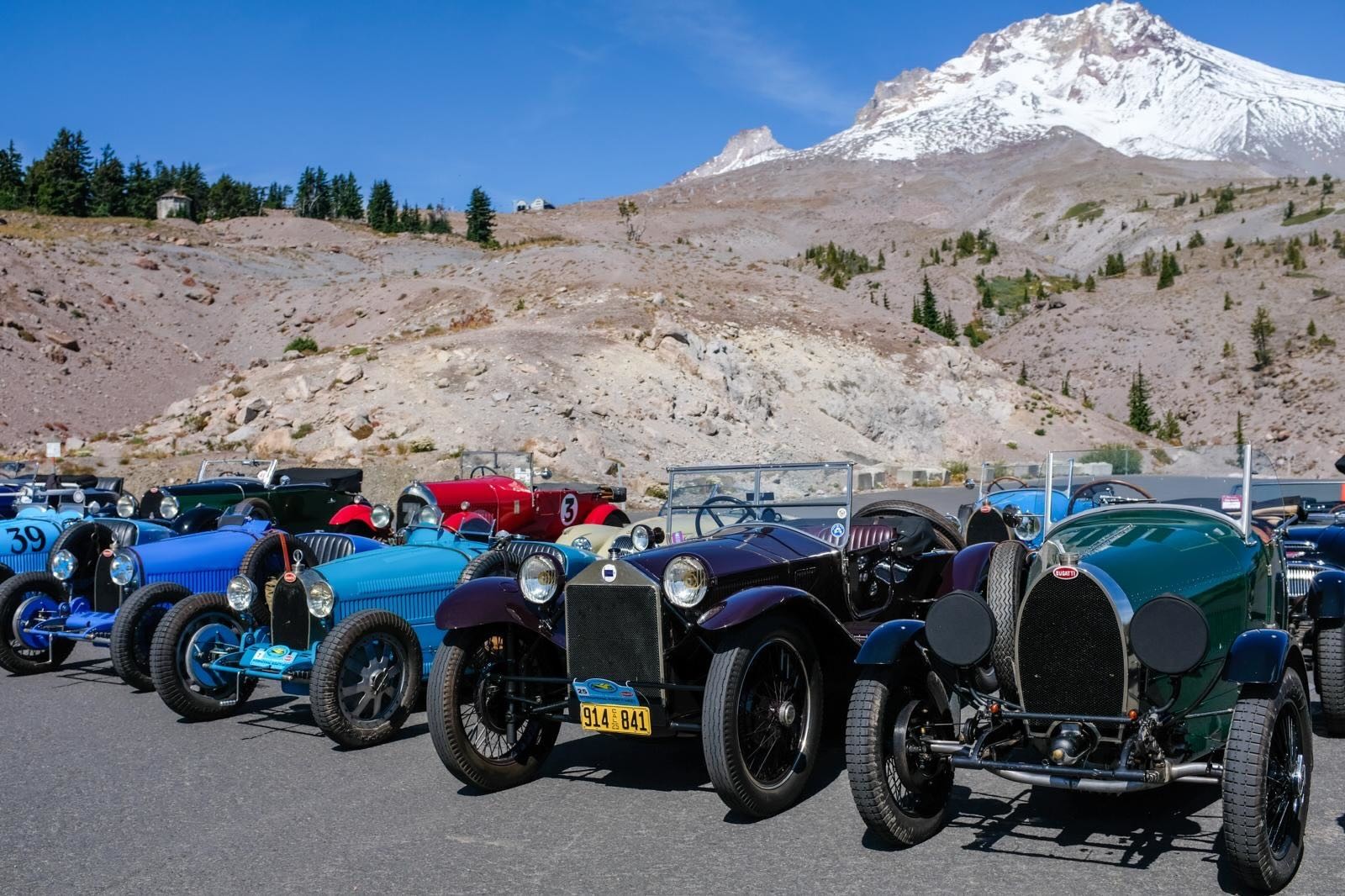
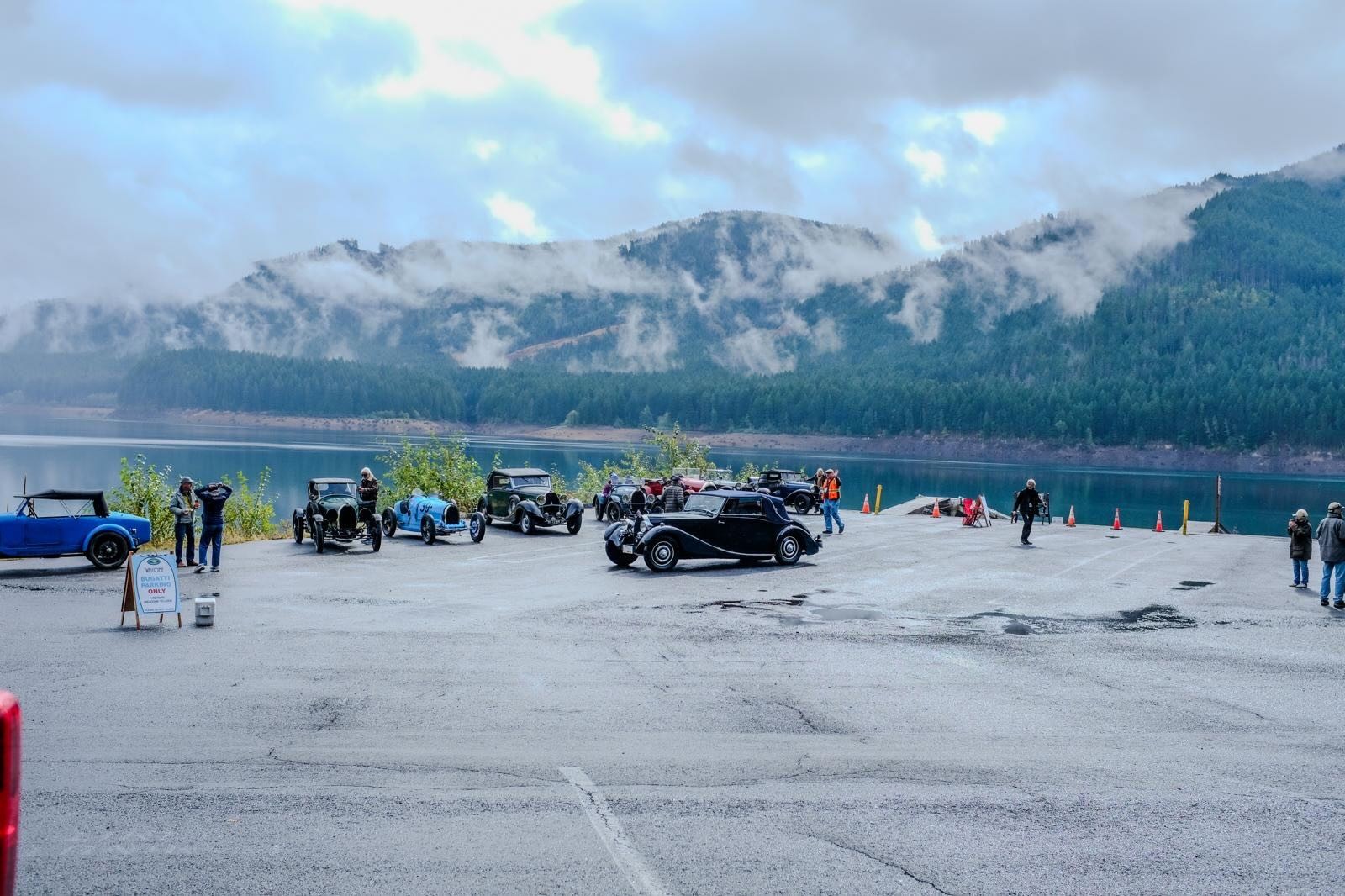
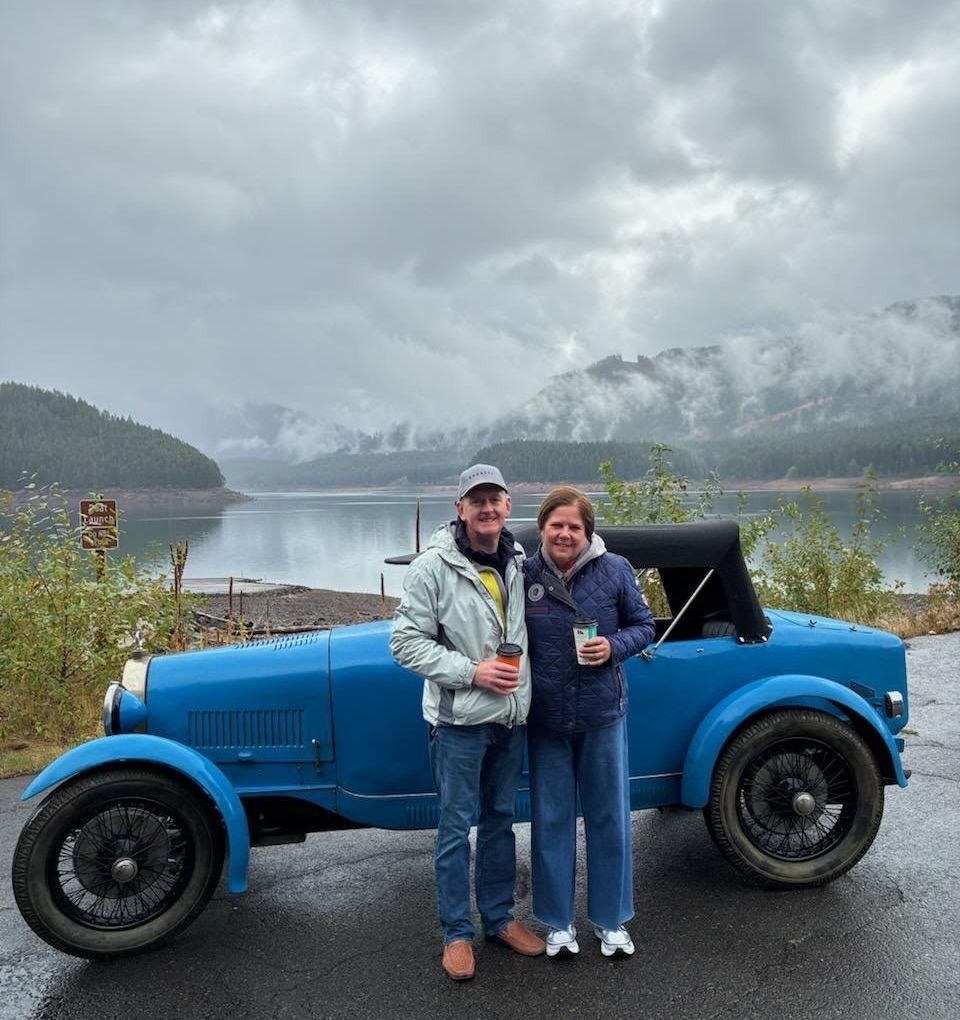
From the valley to the mountain The first day took us 150 miles from the valley floor to Mount Hood. We passed hop fields and nursery country, stopped for coffee beside the reservoir at Promontory Park and then began to climb. Only afterwards did Ed tell us that the road through the Clackamas Canyon, which we had meant to take, had been closed by fire. The whole afternoon - Estacada, Sandy, the long hairpins of Marmot Road and Lolo Pass - had been created as a diversion around it. Not one of us noticed. The route was beautiful from beginning to end, and if Ed had never told us we would never have known there had been another plan. That is the highest compliment one can pay a road book. Then we came to Timberline Lodge. I had been looking forward to it, though I will admit that The Shining had prepared me for something a little sinister. Instead I found something quite different: a majestic building of huge timbers, stone, ironwork and carving, all made by hand in the 1930s by people who plainly cared about the work they were doing. It became a thread running through the week. America does not have our cathedrals and palazzi, and it would be foolish to go looking for them. What it has, at its best, is something different and no less fine: things made with great skill, from the materials that were close at hand, by people who understood what those materials could become.
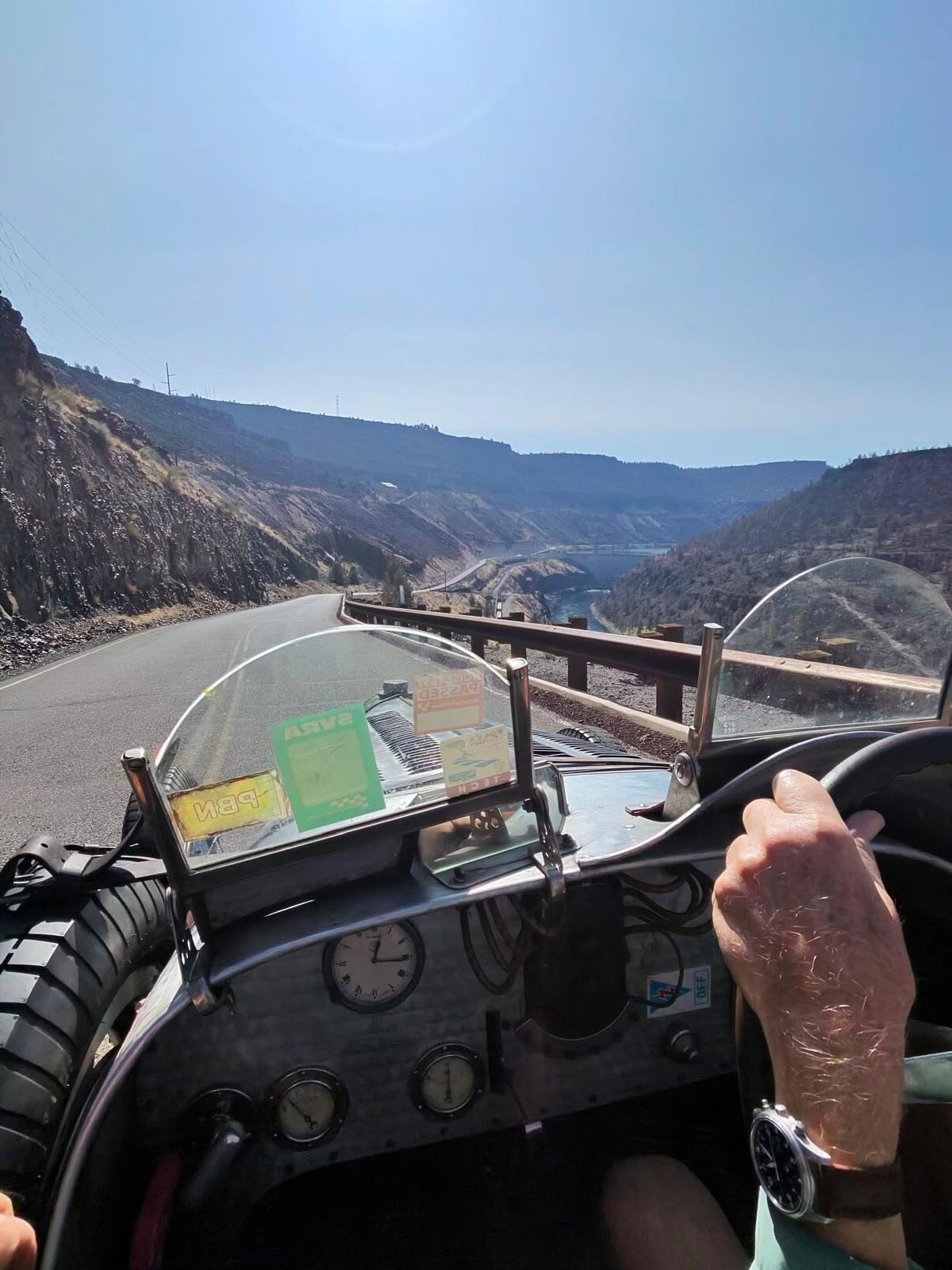
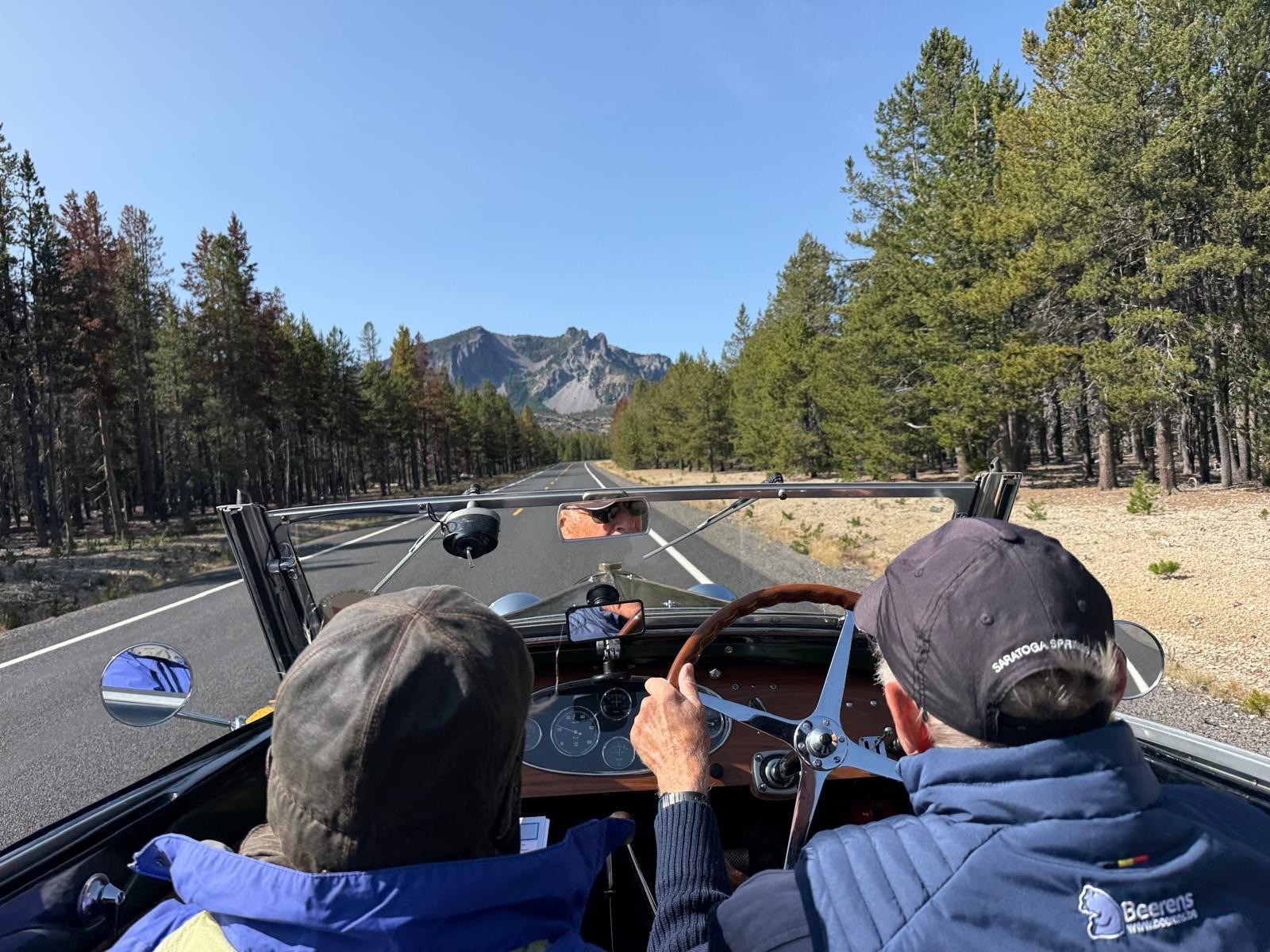
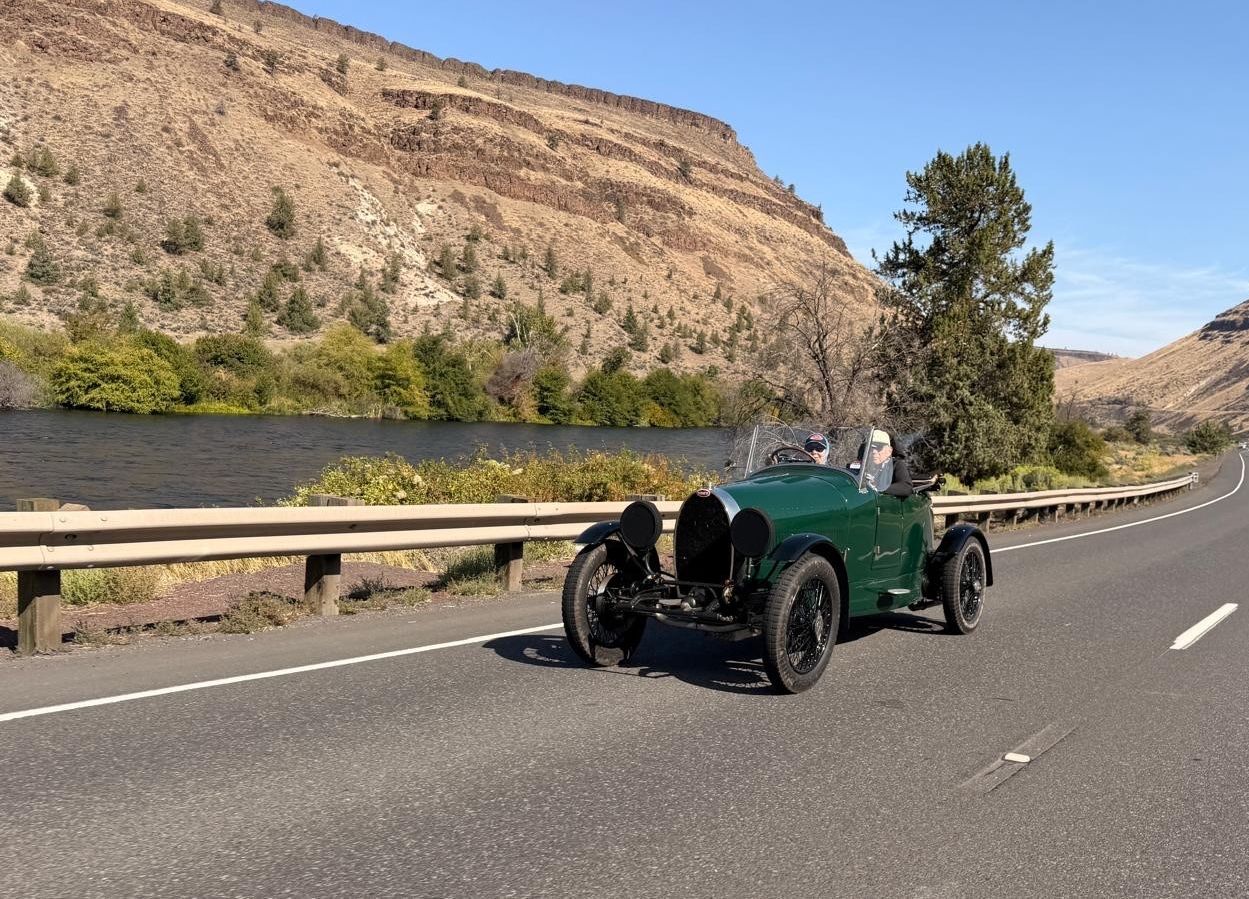
Over the Cascades If the first day belonged to Timberline Lodge, the second belonged to the country itself. I have never watched a landscape change so completely in one day. We began on the western side of the mountain, in thick, tall forest of Douglas fir and hemlock, and climbed to the crest of the Cascades, then came over the top and descended into another world. The firs became pine, then juniper, then open sagebrush. From a lush forest to vast emptiness. The temperature rose as though somebody had opened an oven door. The cold on the way up and the sudden desert heat on the far side came within minutes of each other, and both George and I quickly took our morning layers off. We crossed the Warm Springs Reservation and stopped at the museum to learn about Native American history. The beadwork, basketry, clothing and objects made for daily use were extraordinary: practical things, made beautifully, by people who took what the land offered and wasted nothing. But the thought that stayed with me was a sadder one. These were people who had moved across an entire country, following the seasons over distances I had only that morning begun to understand. Now they have been left with a handkerchief of land. We had spent the morning crossing what was once their country and had scarcely touched it. I found that very hard to accept. What surprised me most on the dry side were the mountains in the distance. I had expected desert, and the desert was certainly there—sage, dust, rimrock and heat—but along the western horizon stood snow-covered peaks, one after another, rising directly from the flat country with nothing leading up to them. They looked as though a child had planted a row of ice-cream cones upside down in the sand and then scattered shaved ice over the wrong end!
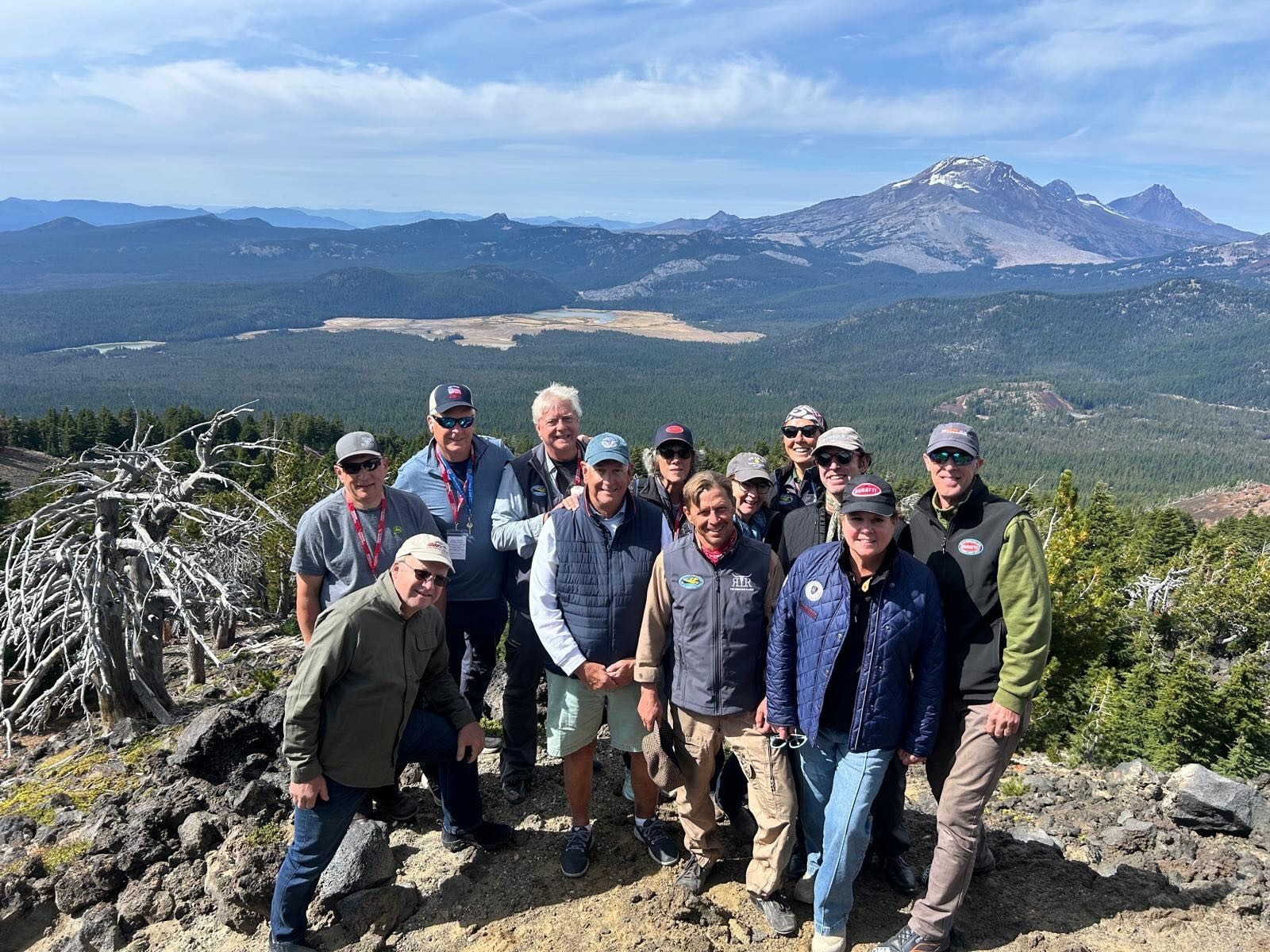
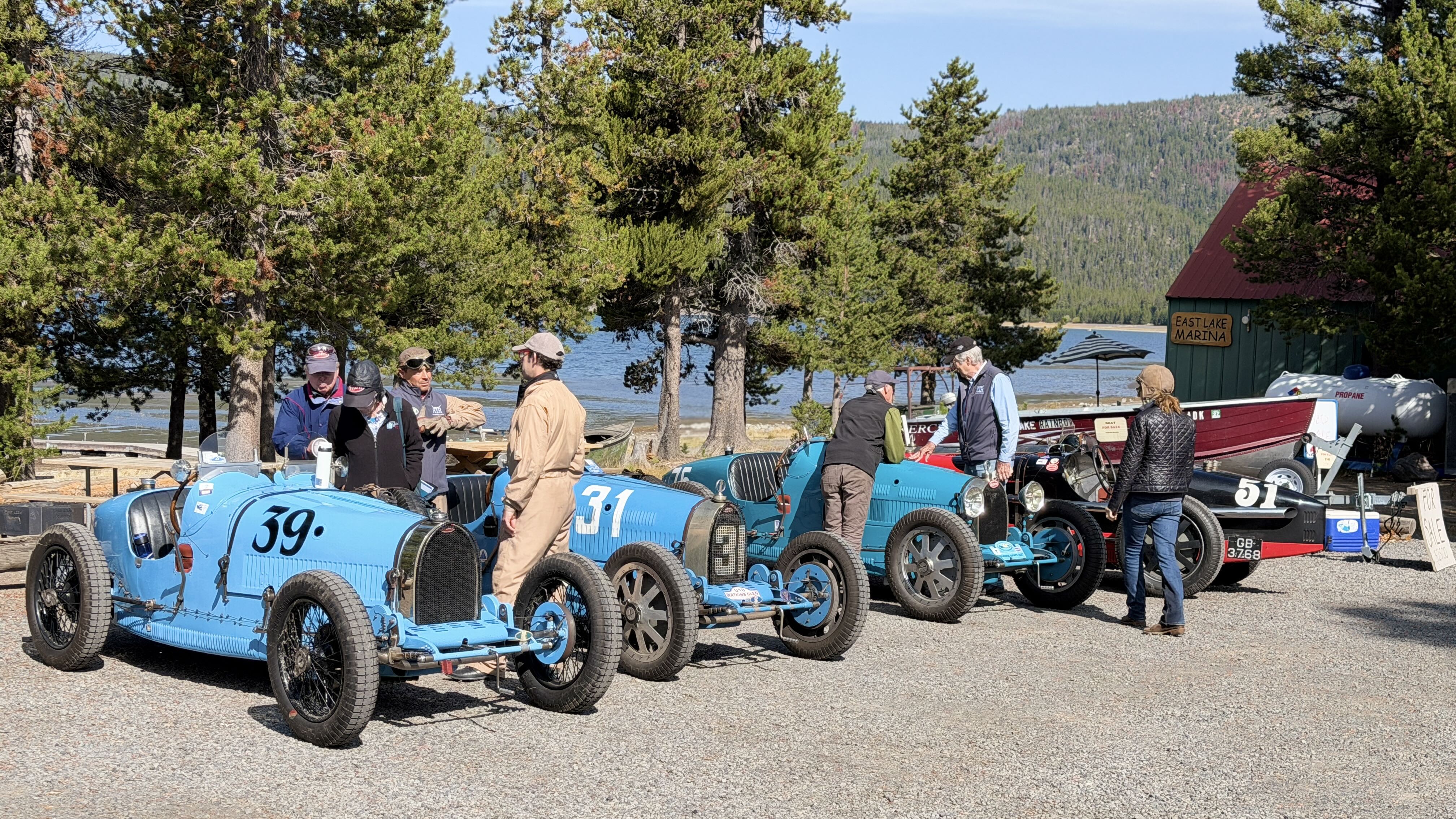
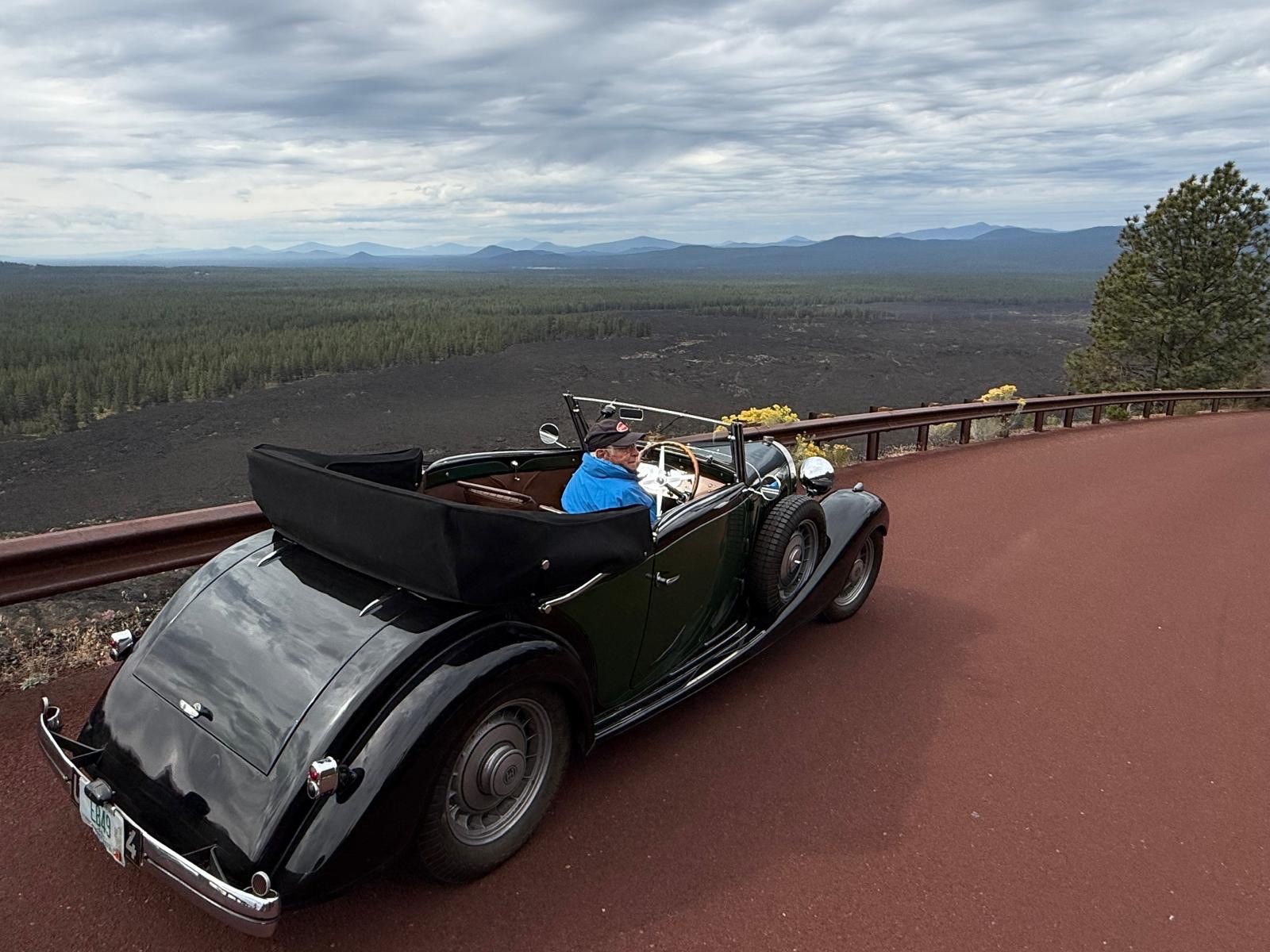
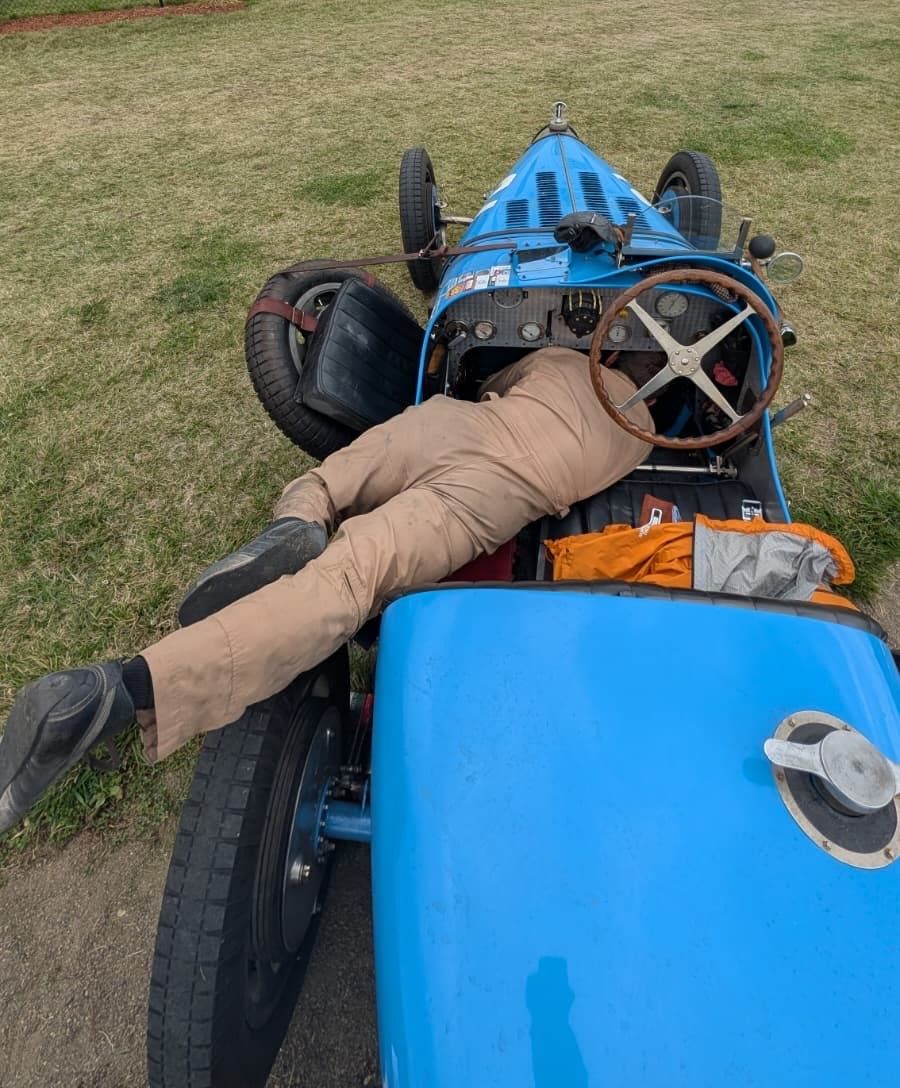
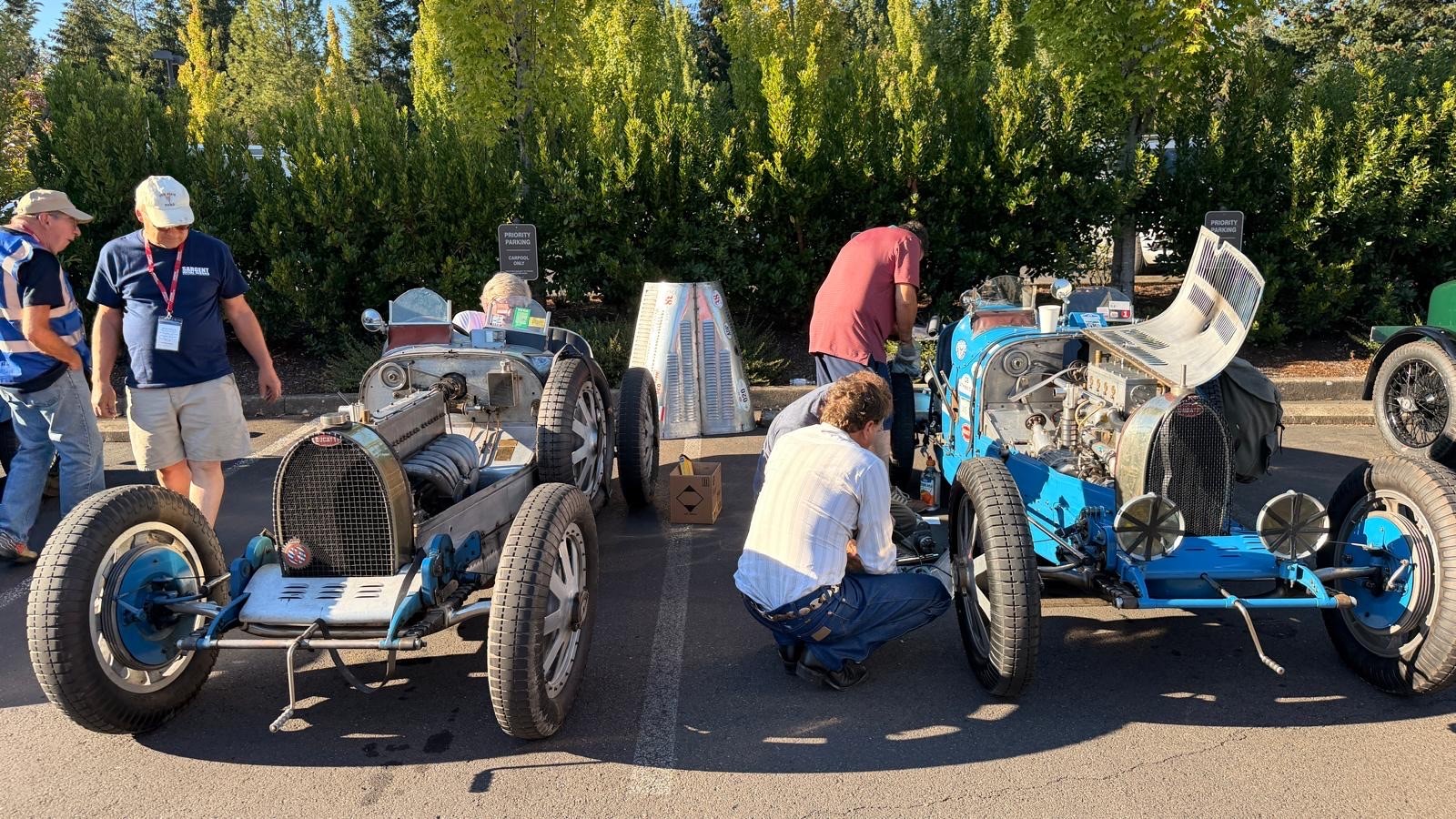
Water and Lava, and a day on the River The third day was the most fascinating of the week and perhaps the loveliest. We climbed to Newberry, which is not a mountain at all but a caldera: a collapsed volcano with lakes lying inside it. In the clear morning cold, we walked to see Paulina Falls. Then came the Big Obsidian Flow, a field of black volcanic glass only 1,300 years old, lying across the landscape like a frozen wave. There were cinder cones, pumice, lava and obsidian all together. It felt like walking into a landscape one can only imagine from the time of the dinosaurs. Only at the top did the contrasts between the dark glass, the lakes and the distant peaks come fully into view. At Mount Bachelor, most of us took the chairlift. It was worth every moment: 360 degrees of volcanoes, the three Sisters and every peak in the chain, with the whole architecture of the country we had spent two days crossing spread out beneath us. This is where I should say something about the programme. Ed and the Oregon team had judged the balance perfectly. The stops were there to be enjoyed rather than endured. Nothing was compulsory, yet everything seemed worth doing. It is much harder than it looks to create a week with enough structure to hold everyone together, but enough freedom for people to make it their own. The volunteers prepared drinks and snacks at every stop, well aware that in the United States it is not always easy to find the little roadside café one takes for granted in Europe. The fourth day was free. Several people drove to Crater Lake, another caldera altogether and, by every report, spectacular. I rather wish now that I had gone with them. Instead, I went fly-fishing on the Deschutes with Melanie, Chrisso, Tim and Jonathan. It is one of America’s great trout rivers, running where we were through a narrow lava-rock canyon, with enormous ponderosa pines and junipers above it. Tim, who claimed to be a beginner, caught more than the rest of us put together. Melanie discovered that there was no signal of any kind and happily disappeared from the world for a day while Jonathan, the self-proclaimed professional, caught two trout the size of ‘fish fingers’. Rick, our chaperon, drove us all the way there and spent the day watching us fail. He deserves more thanks than he received. Meanwhile, the 35B had been forming opinions of her own. She had not been running as she should, and the first diagnosis was the carburettor, but we later discovered that it was the fuel pressure pump that was leaking. A new leather seal was flown in overnight, Scott Sargent got his hands dirty while I was fishing, and she was herself again.
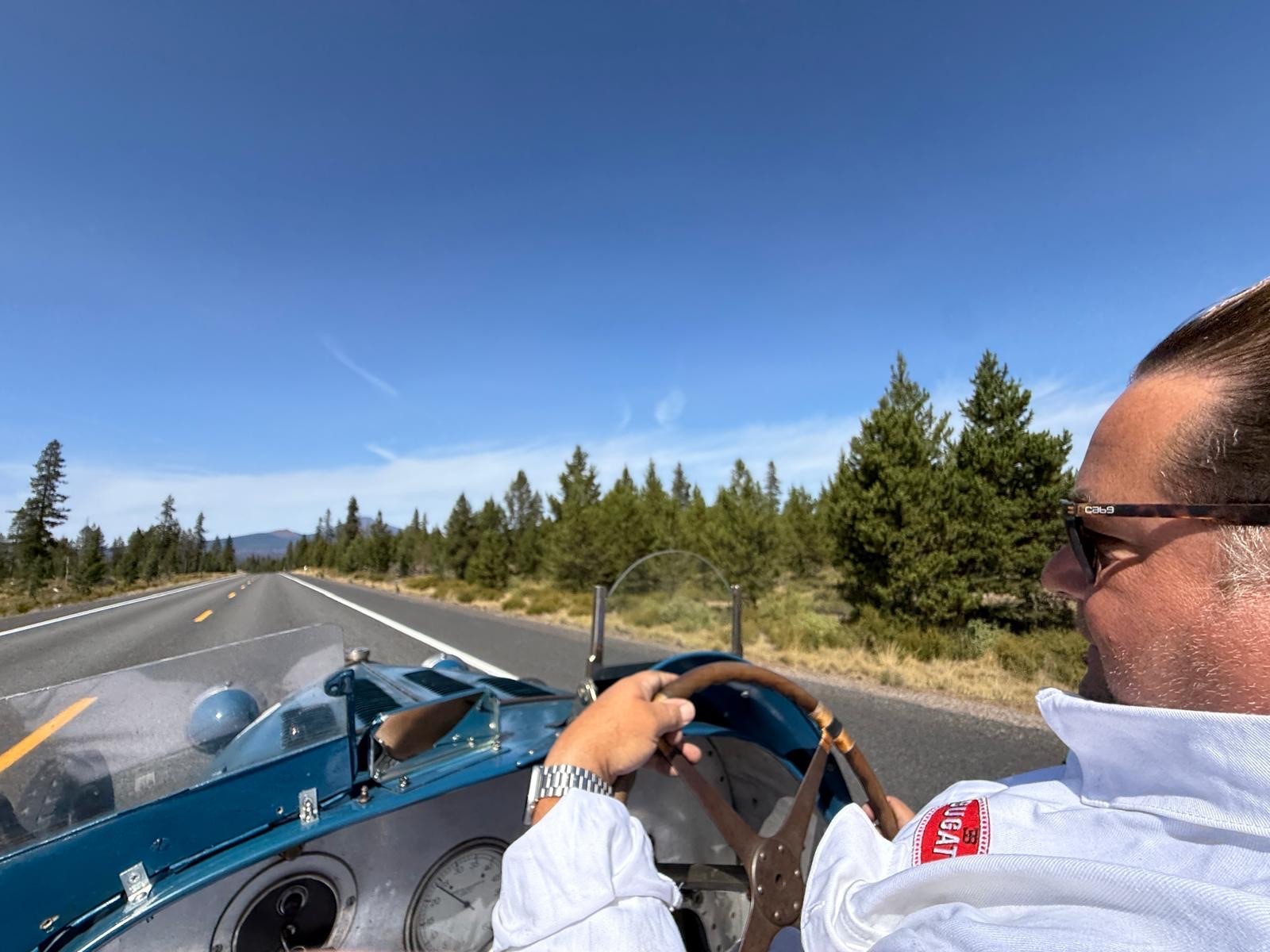
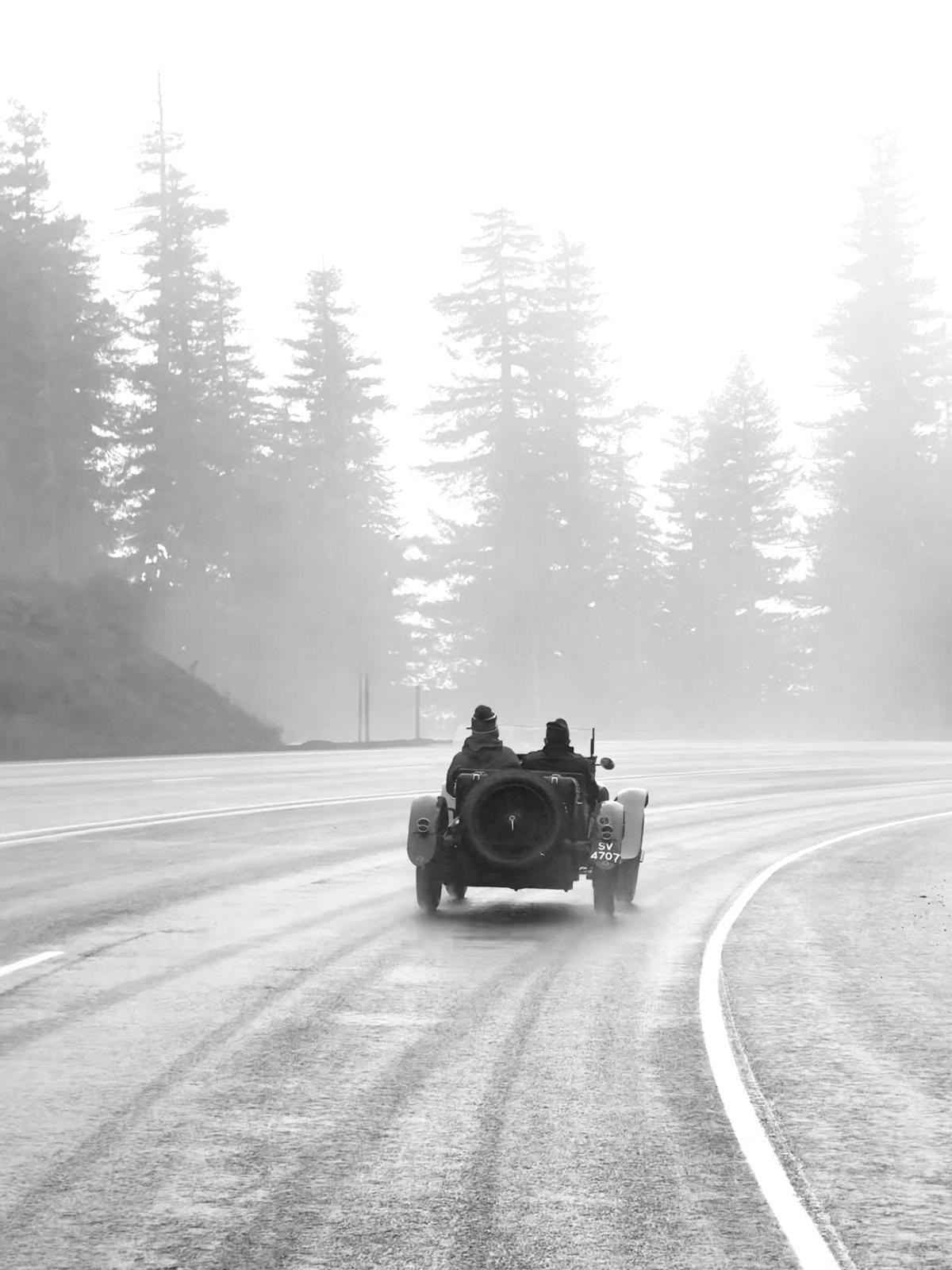
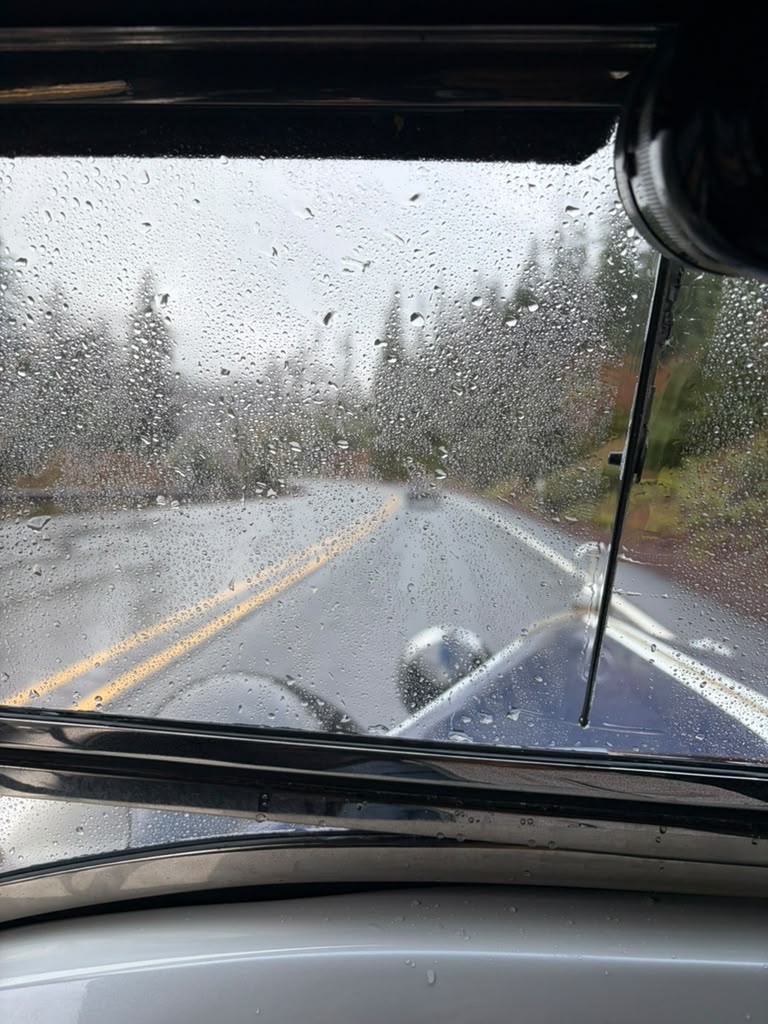
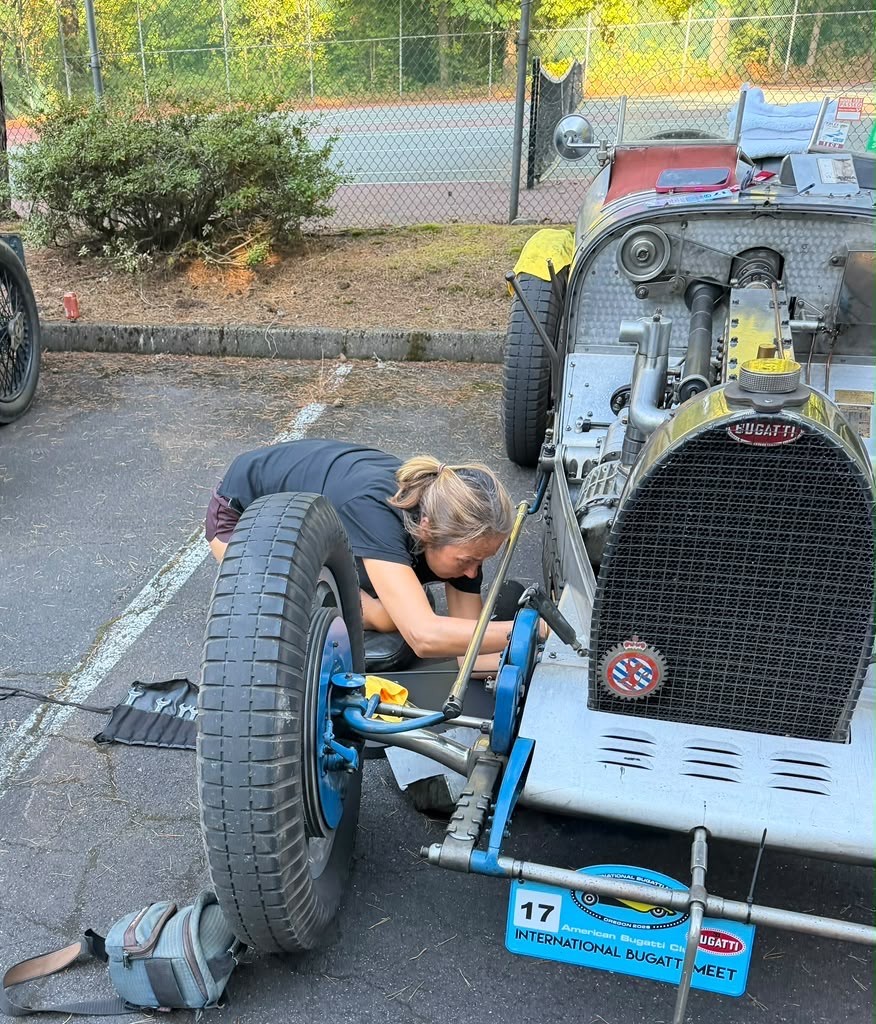
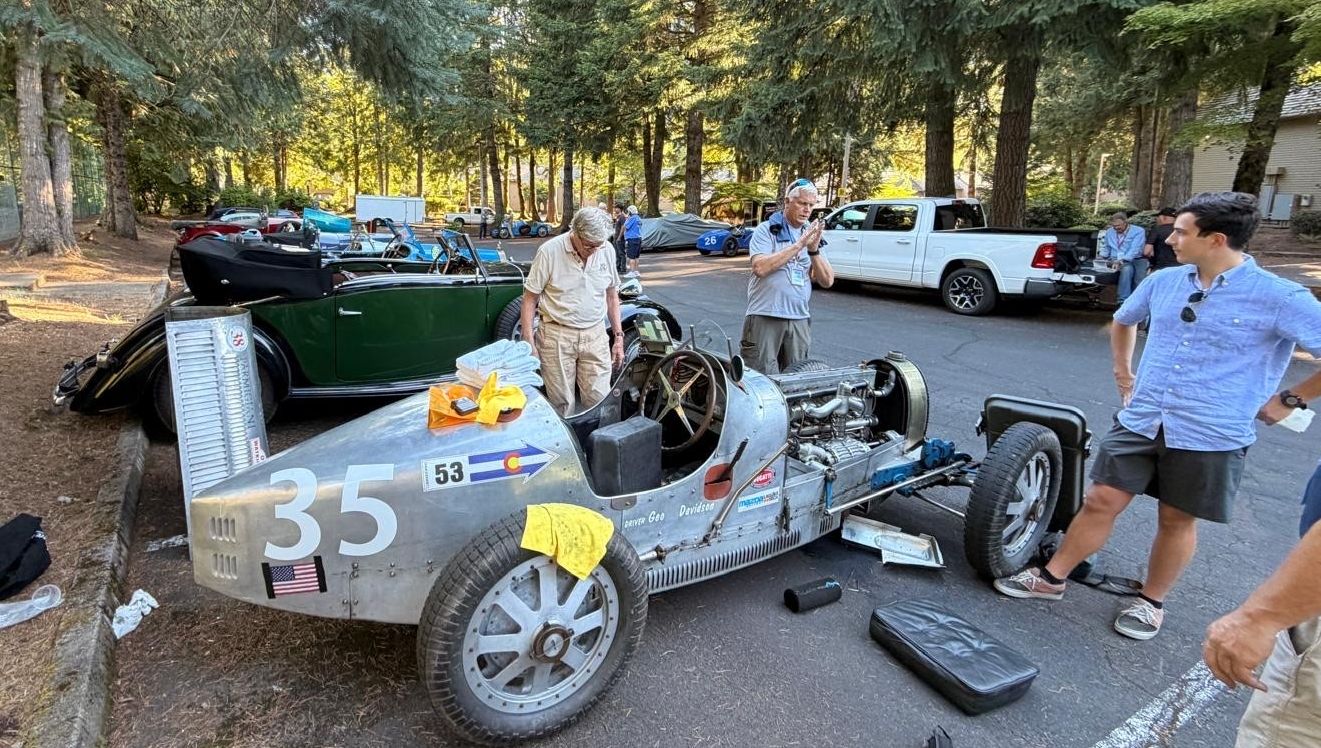
The day the sky came down The fifth day was the long one: 188 miles from desert back to valley, leaving Sunriver at half past seven, with our first stop in the little western-themed town of Sisters. Over those final two days, we passed through burned forest: mile after mile of blackened trunks standing above the ground like spent matches. One of those fires was the reason for the diversion in the programme. Fire belongs to this country in a way it does not to ours, and the ground is green again between the black trunks, but it was a sobering thing to drive through. Somewhere after three Sisters, climbing the pass towards Detroit Lake, it began to rain. Then it began to hail. Just to add to the adventure, we encountered another problem. At an earlier coffee stop, Luca warned us that the exhaust was hanging far too low. When we looked, the bracket beneath the passenger seat had simply vanished. We did what one does beside a road with no tools and only other people’s kindness to draw on: metal coat hangers, wire and a good deal of optimism. The vibration undid the whole arrangement within the hour and the front of the exhaust fell off. Thankfully, there was not much damage, and Neil, one of the volunteers who was directly behind us, collected the part in his boot. At the same time, George, being from Kentucky, had dressed like a man who had never seen snow, and it became apparent that he was moving beyond uncomfortable and towards truly cold. I convinced him to ride in with Neil and the exhaust. It took some doing - being a true gentleman, he did not want to leave me alone in the cold rain - but he thanked me afterwards. I drove the rest of the pass in the rain, with hail coming sideways and not even the engine offering enough heat to matter. So we drove on without an exhaust. A 35B is not discreet at the best of times. Without hers, she found an entirely new voice in the Oregon landscape. For the rest of the week, nobody was ever in any doubt about our arrival. We did not repair her. There were not many miles left, and we had become rather fond of being announced. That left the weather, and I loved every minute. Those of us who drive Grand Prix cars have spent years sitting out in weather, and a little hail has never stopped anyone yet. Apart from her new voice, the car was running perfectly, so we made every stop. I took her through the Gallon House covered bridge, one of the oldest in Oregon, and we stopped for a photograph: a Grand Prix Bugatti framed in a century of American timber. It is not a sight one often sees in Europe. The only pity was that George was not beside me.
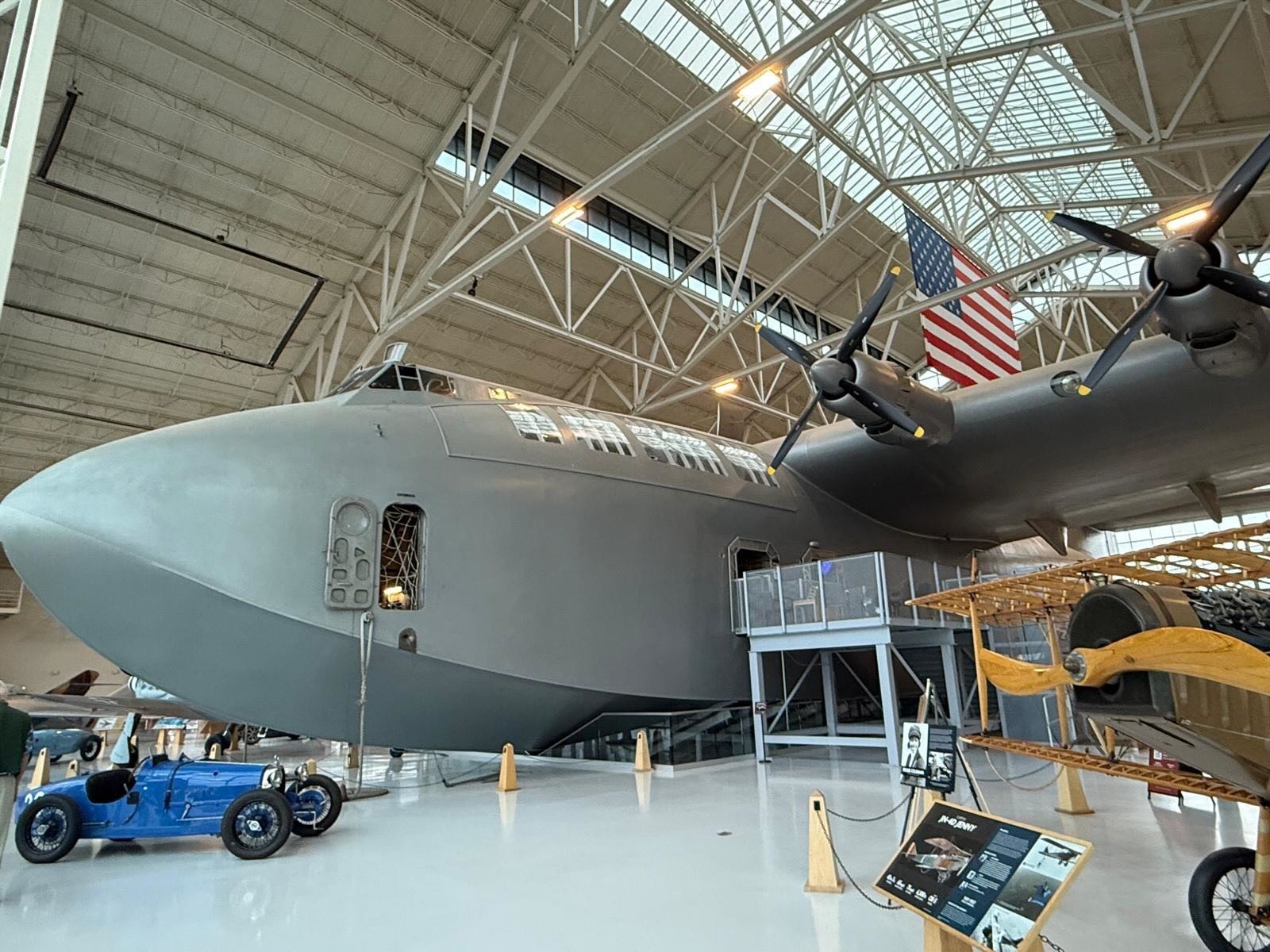
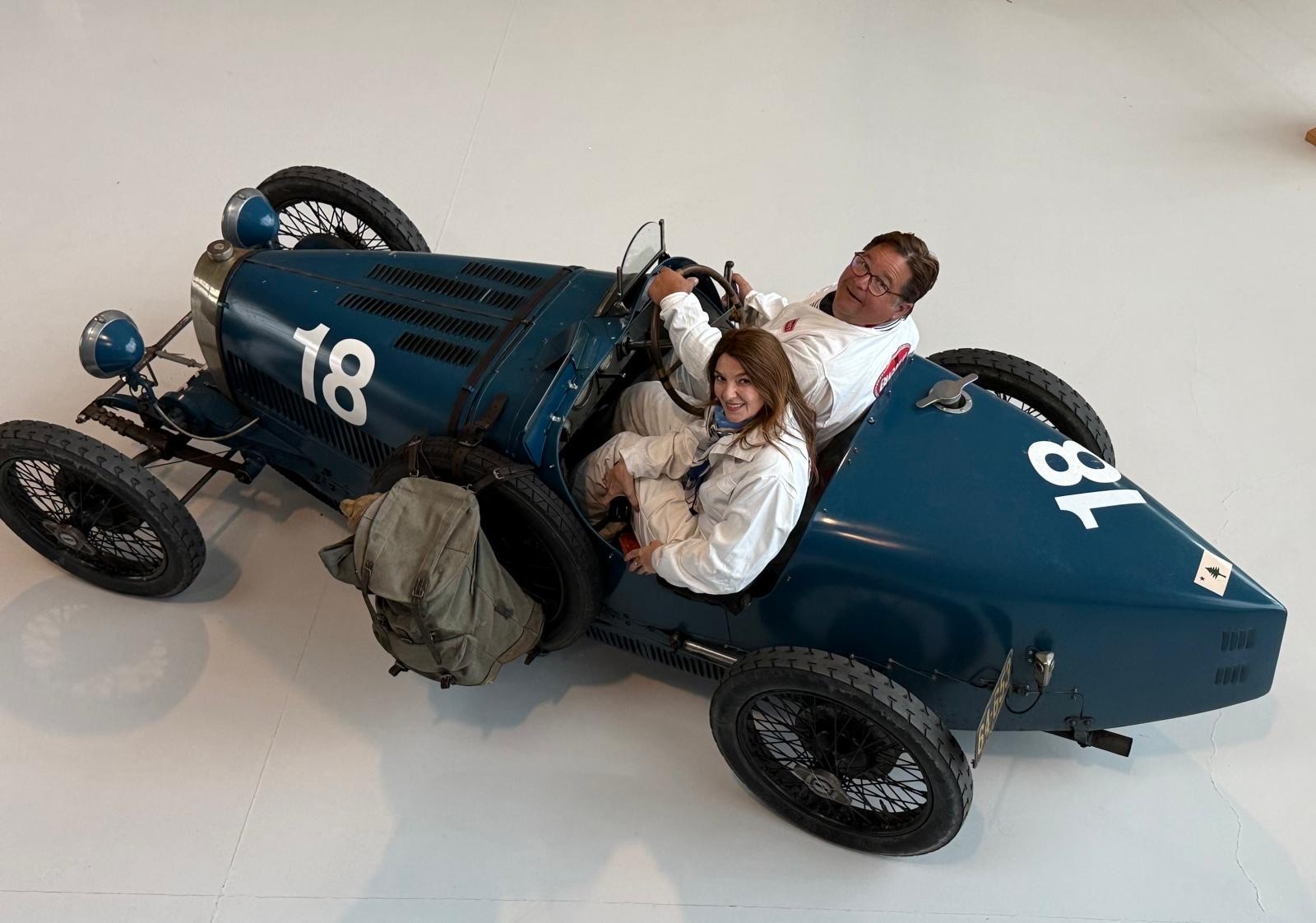
Under the Spruce Goose On the final morning, some left Newberg in the dark. The North American Aerospace Museum in McMinnville - until recently the Evergreen Aviation & Space Museum - agreed to open its doors before anyone else was allowed in, so that we could drive our cars inside and photograph them beneath the Spruce Goose. Going through the silent streets of a sleeping town at dawn, in convoy and with headlamps on, was enchanting. Parking beneath the largest wooden aircraft ever built, with the doors closed to the rest of the world, was a privilege felt by every one of us. The museum was divided between fighter jets and the space programme, but it was the Spruce Goose that made the visit memorable. It flew once, for one mile, and never flew again. Yet so much engineering and innovation went into building it that, we were told, the industry took a generational step forward. Its value was in creating new technology and design, not in the use. That is, perhaps, the argument for everything we do. Ettore pushed his cars to be ahead of everyone else, and a century later we are still learning from them. The afternoon belonged to wine country: Durant at Red Ridge and the vineyards of the Willamette Valley. I had not understood how large the Oregon wine industry had become. Among the vines, the parallels with France and Italy were obvious. The wines were very good indeed and, because of the generosity of several of our sponsors, who were themselves wineries, we were able to taste our way through a range far wider than any of us had expected.
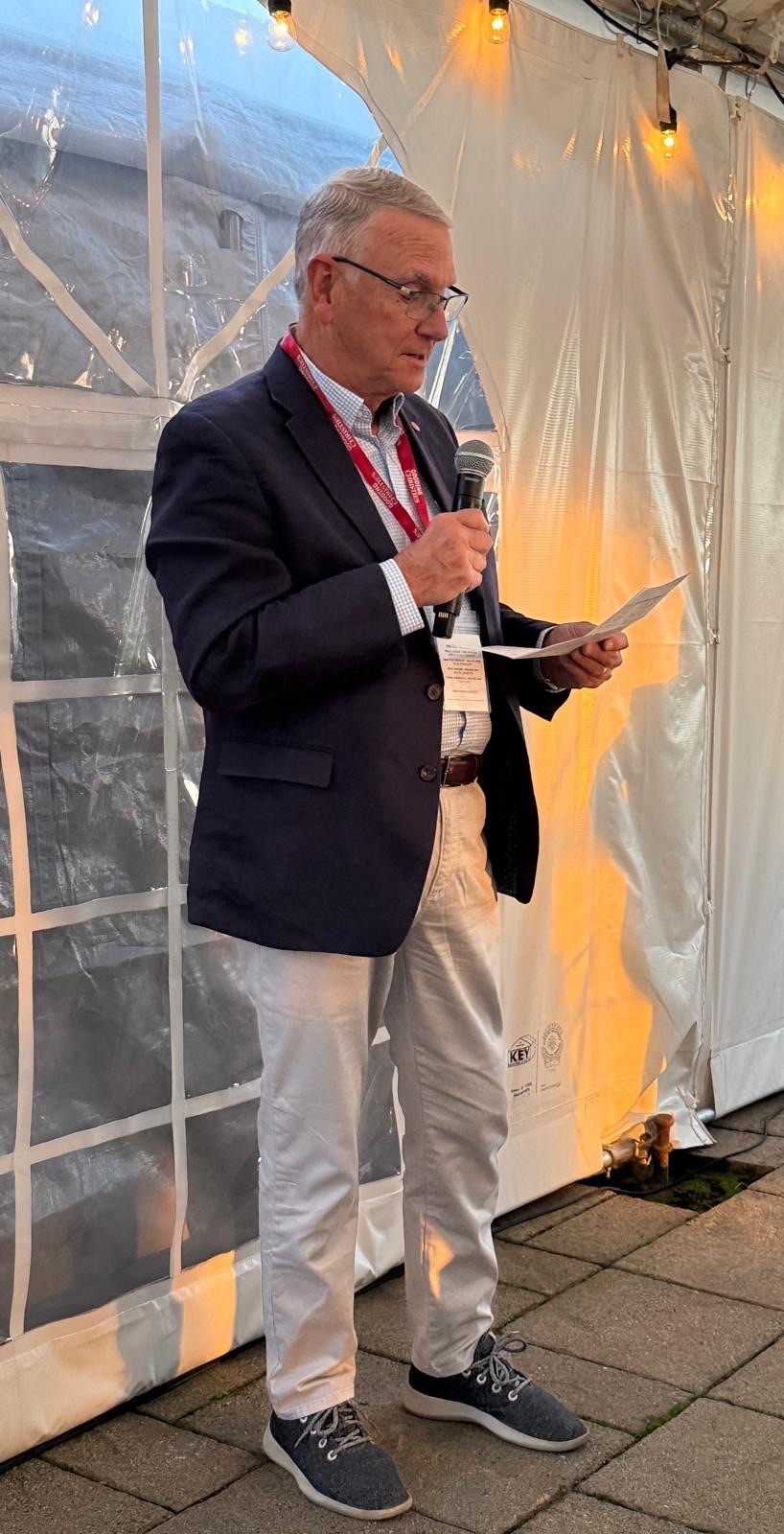
The Speeches Three speeches framed the fortnight and, in the end, they seemed to say the same thing. On the first evening, Peter Currie - who sadly could not join the rally itself - spoke about his father-in-law, David Mize, who died in 2018. Many of us knew David well, and those who did not will have heard the stories: thirty years working across the Middle East, a gift for picking up the local language wherever he found himself, and a quiet admission that there were one or two countries he could no longer visit, on account of what he liked to call his '007' past. He hunted Bugattis the whole time he was doing it. His stories and his company filled a great many evenings over the years, but I think most of us will always picture him behind the wheel of his green Type 40, the car he acquired from Andy Rheault in Vietnam, with his Australian partner in crime, Bob King, beside him. On David's death, as had been agreed between them twenty years earlier, the car went back to Chrisso, who, after a thorough mechanical overhaul, proudly drives it every time he comes to Europe. On the penultimate evening, we were fortunate to have Keith Martin, founder of Sports Car Market, speak about his love for these machines and the fact that none of us truly owns anything. We are caretakers, he said, and if we do our work properly, the cars will outlive us all. His ethos is exactly what most of us believe, and it was no surprise that he was given a standing ovation—and not merely a polite one. On the final day, Sandy Leith and I spoke for the Bugatti Trust. The American Friends of the Bugatti Trust are among the Trust's most important supporters, and much of what exists at Prescott today would not exist without them. I spoke about preserving the history of these cars and handing it on, so that it is not lost once they pass into other hands. The history, after all, is no more ours to keep than the cars are.
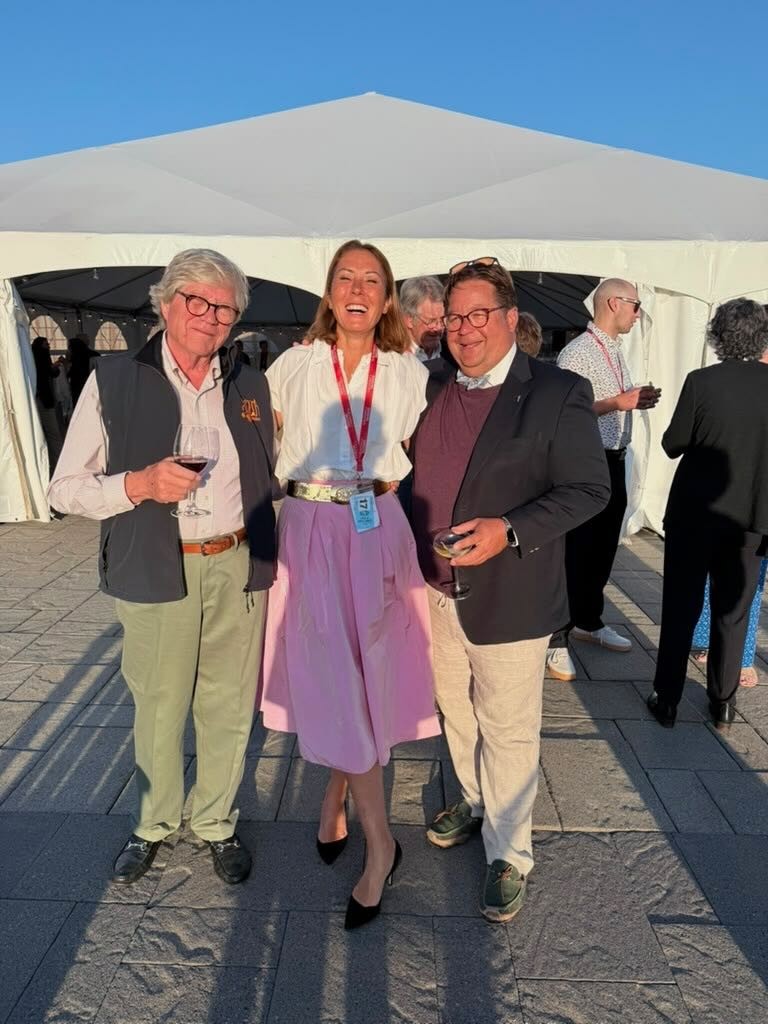 George, Chrisso and I… my two gentlemen Home again Now that I am home, it is not a particular car, meal or view that comes back most often. It is the scale of Oregon: the rivers, the lakes, the mountains and the distance between them. After Denmark in June, I thought I understood empty roads. Oregon was something else. The scale changes the character of the driving. There were none of the village children waving from the roadside that we had found in Denmark, because America is too vast and too thinly settled for that. But the welcome was waiting wherever we stopped: from the ranchers, winemakers, museum staff and volunteers. It was warm and entirely unforced. I thought often of the people who had hoped to come but, for one reason or another, could not. They missed an adventure unlike the earlier American rallies. Oregon was shaped by distance and weather, by coffee stops and long views and a horizon that changed by the hour. It felt like a journey across an entire country. And none of it—not a single mile—would have happened without the people who built the week. Ed carried the whole thing on his shoulders, though he would be the first to say that without Linda Sandberg, who took on the logistics and programme, he could not have managed it. She kept us in line and made sure we enjoyed ourselves. Kelly looked after the luggage, which sounds a modest task until one has watched thirty-five sets of it appear and disappear every morning for a week without anything going missing. Rick, Neil, Jeff and Ed’s brother John took care of the arrows, picked up the stranded and were always somehow where they were needed. I am sure there were many more volunteers and donors who made the week happen and whom I have not named here. To all of them, my deepest thanks for letting us discover this beautiful part of the world. A thank you of its own goes to Tom and Paul of the American Bugatti Club, who organised the US Bugatti Grand Prix at Portland International Raceway and gave so many of us the weekend that began the fortnight.
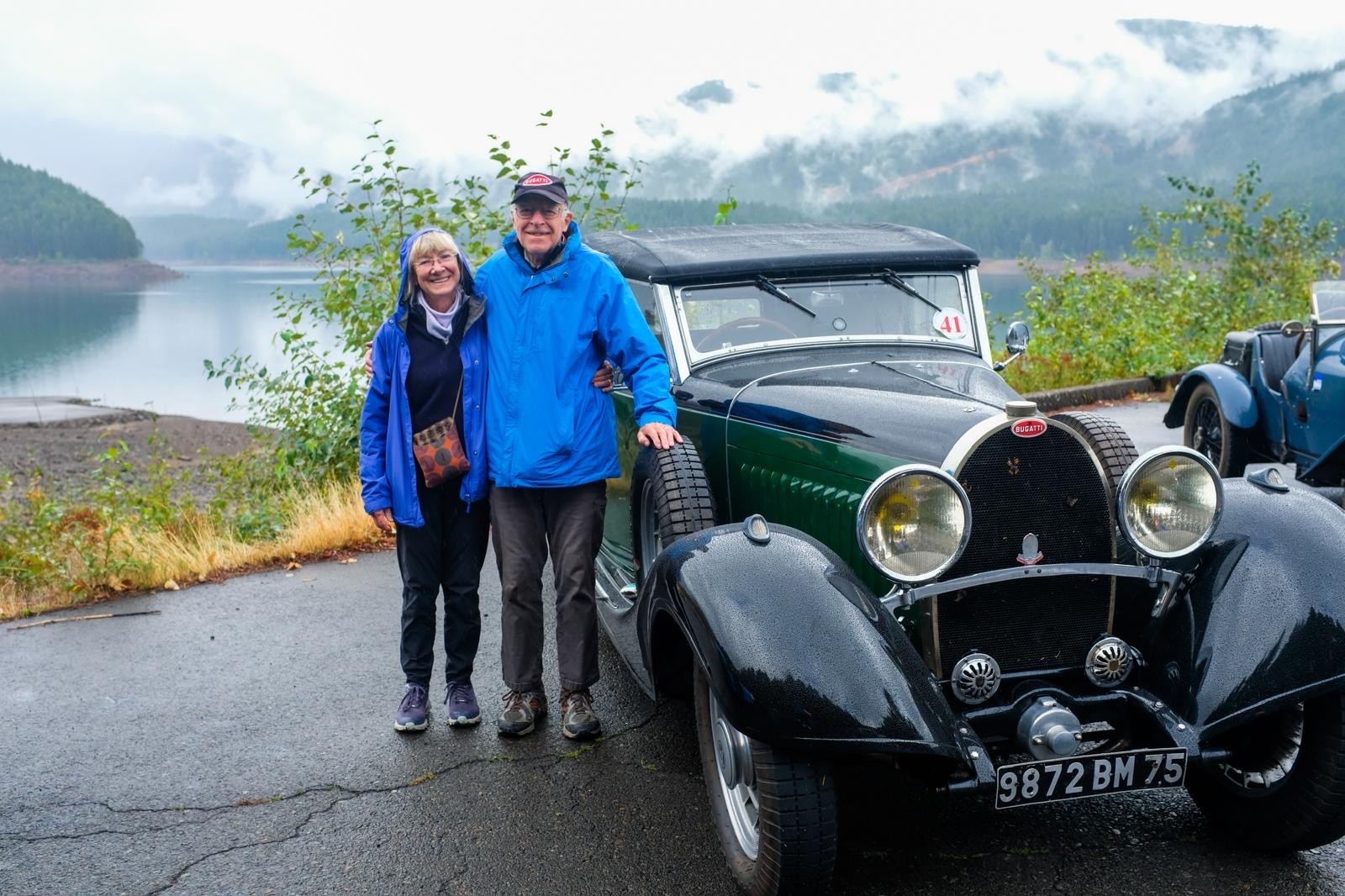
It was a particular pleasure to have Jim and Tonya Hull, and Sandy and Francis Greene - regulars of the European IBMs who had missed Denmark this year - with us, and lovely to see them in their own country. Unfortunately, Jim and Tonya's own rally was cut short almost as soon as it began when their car broke down, but they happily followed in a more comfortable hire car. The distance keeps Americans from our European weeks as surely as it keeps Europeans from theirs, which makes these reunions count for rather more. Sarah Anglum and Mary Latham brought youth and brightness to the fortnight, sharing the driving with their father, James. Watching them was a pleasure, but it was more than that. Sarah and Mary at the wheel of their father’s car matter more than any trophy handed out that week. These cars are not objects. They are living things, already carrying lives of their own, and they must not be allowed to fade away quietly in garages. If our children learn to drive them while they are young, their future is safe. In 2027, we go to Yorkshire. Judging by the sound in the tent on that last evening, a great many of us intend to be there. Hopefully we won’t need a coat or an umbrella! Below: A selection of additional photographs, in no particular order. Thanks to all the photographers! |
|